I was reading scriptures while in the temple and found this great explanation of how we should view "authority". Paul was a very philosophical man which can probably be attributed to his deep study of the Jewish religion, his heavenly visit which had a dynamic affect on him, then his continued deep study with a greater awareness of the giver of laws. In his letter to the Romans(13th chapter) who were generally well-educated, he had this to say:
Let every soul be subject unto the higher powers. For there is no power in the church but of God; the powers that be are ordained of God. Whosoever resisteth the power, resisteth the ordinance of God: and they that resist shall receive to themselves damnation. For rulers are no a terror to good works, but to the evil. Wilt thou then not be afraid of the power? do that which is good, and thou shalt have praise of the same: For he is the minister of God to thee for good. But if thou do that which is evil, be afraid; for he beareth not the sword in vain; for he is the minister of God, a revenger to execute wrath upon him that doeth evil. Wherefore ye must needs be subject, not only for wrath, but also for conscience sake.....Owe no man any thing, but to love one another: for he that loveth another hath fulfilled the law.
He lists lots of details about behaviors but this part specifies how to view "Church authority". Now, considering trouble that has been disclosed within the Catholic church due to the unquestioned authority of priests and other leaders, Paul's advice may come into question. However, as in every instance of every human's need to discern, our only real recourse is to ask God. Rather than simply follow and obey as a blind sheep OR rebel and refuse to follow someone we consider an imperfect man, we each need to:
*first, recognize the authority given to an imperfect person realizing that we are also sometimes given authority as responsible for a stewardship (even as simple as parenthood) and need others to be willing to do what they may be asked to do,
* then pray to know for ourselves that what we are asked to do is right. If we truly feel it is not right, then we can approach the authority personally and explain our viewpoint, not in a contentious, accusatory way, but in a sincere desire to assist them in their stewardship.
As Paul states: Whosoever resisteth power, resisteth the ordinance of God. We must recognize when we are challenging a person and when we are challenging God. Whether it's about a general issue such as same sex marriage or a more personal issue like accepting a calling or assignment at church, God will have an opinion and we can go straight to the source and ASK!
Wednesday, December 27, 2017

Tuesday, December 26, 2017
But he's ugly!
It's always interesting to see how science fiction/fantasy non-earthlings are portrayed in movies or comics. They often have a humanoid form with strange hair or appendages. There is an instinctive reaction in us to notice how "attractive" others are. Scientists would probably attribute that to natural selection and propagation of the species. Scientists have also done studies which show that people who might be considered "attractive" are often treated better by clerks, wait-staff, and other strangers. I remember finally maturing to the point when I noticed couples where one or both of the people were not what might be magazine-worthy yet they seemed to be happy and very attentive to each other. At first I wondered, "How can he/she really be interested in a relationship with that person who doesn't appear attractive?" Truly, beauty is in the eyes of the beholder. But, also, there is something to be said for "you can't tell a book by its cover". Most of us have experienced a model-type attractive person who is vain and obnoxious. Most of us have also known a person who isn't quite so "easy on the eyes" that is kind, considerate, helpful, honest, hardworking, etc. There are lots of people who go to great lengths to improve the "cover of their book" by changing hair color, dieting, working out, investing in expensive and extensive wardrobes, and even plastic surgery including botox injections and nose jobs. Why? Is it really all about our concern to propagate? Why do we continue to be so concerned even AFTER having mated with someone willing to accept us as we are at the time? What does it say about our character when we are so affected by a person's outward appearance, even our own? Do we not fully understand the shallowness of our attitude?
I know several people who suffer daily from feeling they don't look "good enough"- some married and some not. The ones who are married often think their partner is just amazing for having "lowered" themselves enough to hook up with such a low-life as themselves. The ones who are not married might be really interested in being married but have convinced themselves that no one is ever going to want them except maybe someone who is even worse than they are! How do we overcome this hang-up?It's obviously shallow, unfair, unrealistic, and just plain wrong. Yet we continue to value people according to their outward appearance.
One way that I have seen people get over it is to have a child, genetically their own or adopted, who has special needs which generally causes them to be somehow misshapen or have an awkward expression or behavior. When you live every day with someone less than beautiful on the outside, you come to better appreciate who people are and not so much what they look like. When you care for an innocent, helpless child all day every day, your love can increase through your service. (That's not always a given. There are some who only develop a resentment, sadly enough.)
Another way I have seen people get over it is to have exposure to one of the "beautiful on the outside" people that is cruel, selfish, pompous, and altogether impossible to get along with. The person can be a boss or other work companion, or a roommate or a family member. You come to realize that beauty truly is often only skin-deep. That helps you when looking at other people around you as well as in the mirror. You're more inclined to look past just what shows on the outside and better appreciate what's on the inside.
As much as it benefits society to have "ugly" people treated more kindly, it benefits every single individual even more. Think about what the world would be like if people no longer judges others by how fashionable their clothes were or how lovely their hair or skin was or how well-shaped they were. I can see vividly in my mind photos from National Geographic of women in Africa stretching their necks higher and higher with neck bands because their culture considers that attractive. There is also the x-rays of women a century and more ago whose spines were distorted from wearing really tight corsets. How about the ancient Oriental women whose feet were so misshapen from being bandaged to stay petite? Also, the countless stabbing with needles for tattoos and piercing of all kinds of places that currently are considered culturally fashionable.... WHY??? We would be so much better off if we could stop ourselves from focusing on the covers of books and take the time to appreciate what's inside- get the whole story. It would make us kinder, more patient people. It would make us better at liking ourselves and accepting what's in the mirror. It's good to look neat, clean, and pleasant but it's really not necessary to be so demanding of whatever the current culture labels as good looking. I think we should work harder at being just plain GOOD.
I know several people who suffer daily from feeling they don't look "good enough"- some married and some not. The ones who are married often think their partner is just amazing for having "lowered" themselves enough to hook up with such a low-life as themselves. The ones who are not married might be really interested in being married but have convinced themselves that no one is ever going to want them except maybe someone who is even worse than they are! How do we overcome this hang-up?It's obviously shallow, unfair, unrealistic, and just plain wrong. Yet we continue to value people according to their outward appearance.
One way that I have seen people get over it is to have a child, genetically their own or adopted, who has special needs which generally causes them to be somehow misshapen or have an awkward expression or behavior. When you live every day with someone less than beautiful on the outside, you come to better appreciate who people are and not so much what they look like. When you care for an innocent, helpless child all day every day, your love can increase through your service. (That's not always a given. There are some who only develop a resentment, sadly enough.)
Another way I have seen people get over it is to have exposure to one of the "beautiful on the outside" people that is cruel, selfish, pompous, and altogether impossible to get along with. The person can be a boss or other work companion, or a roommate or a family member. You come to realize that beauty truly is often only skin-deep. That helps you when looking at other people around you as well as in the mirror. You're more inclined to look past just what shows on the outside and better appreciate what's on the inside.
As much as it benefits society to have "ugly" people treated more kindly, it benefits every single individual even more. Think about what the world would be like if people no longer judges others by how fashionable their clothes were or how lovely their hair or skin was or how well-shaped they were. I can see vividly in my mind photos from National Geographic of women in Africa stretching their necks higher and higher with neck bands because their culture considers that attractive. There is also the x-rays of women a century and more ago whose spines were distorted from wearing really tight corsets. How about the ancient Oriental women whose feet were so misshapen from being bandaged to stay petite? Also, the countless stabbing with needles for tattoos and piercing of all kinds of places that currently are considered culturally fashionable.... WHY??? We would be so much better off if we could stop ourselves from focusing on the covers of books and take the time to appreciate what's inside- get the whole story. It would make us kinder, more patient people. It would make us better at liking ourselves and accepting what's in the mirror. It's good to look neat, clean, and pleasant but it's really not necessary to be so demanding of whatever the current culture labels as good looking. I think we should work harder at being just plain GOOD.
Sunday, December 17, 2017
Will you be comforted?
It is a common human reaction when another creature (human or not) is in pain or sorrowing, to try to comfort it/her/him. I know I tried to teach my children to react in that way and have done my best to do so as well. Just as providing service to others is important and requires a receiver of that service to accept it, you can offer comfort and have it refused. I have seen many instances of a child crying out of fear or pain and absolutely refusing to have someone cuddle and reassure them. They flail and cry in anguish despite the best efforts of anyone trying to comfort them. In the scriptures there are several similar instances:
And Jacob rent his clothes, and put sackcloth upon his loins, and mourned for his son many days. All his sons and all his daughters rose up to comfort him; but he refused to be comforted; and he said, For I will go down into the grave unto my son mourning... Genesis 37:34-35
Thus saith the Lord; A voice was heard in Ramah, lamentation and bitter weeping; Rahel weeping for her children refused to be comforted for her children, because they were not. Jeremiah 31:15
He (Coriantumr) began to repent of the evil which he had done; he began to remember the words which had been spoken by the mouth of all the prophets, and he saw them that that were fulfilled thus far, every whit; and his soul mourned and refused to be comforted. (Ether 15:3)
There are even more instances of the Lord offering comfort. There is certainly much need of comfort in this world due to hatred, war, mistreatment, injustice, illness, injury, and on and on. There is not a human on the face of the Earth who has not experienced pain and sorrow. But that's the way it's supposed to be! Shocking as it is to acknowledge that, it's true. For it must needs be, that there is an opposition in all things. (2 Nephi 2:11) It's easy enough to figure out why that is. How can you understand and feel peace if you have never experienced dissension or hatred? How can you comprehend how glorious joy is if you have no idea what sadness is? How can you measure success and accomplishment if you don't know what it means to fail?
So, in this day of wars and rumors of wars, fires, men's hearts turning cold, famine, pestilence, storms, earthquakes, disease, etc., our only reactions are to either harden our hearts to suffering and become part of the problem OR look for a solution. The only solution is from a higher, more experienced and wise Heavenly Parent. Through His Spirit and the gift of His Son, we can be comforted. How? I would recommend a more complete reading of a conversation between the Lord and Enoch, but I will give some highlights:
As Enoch saw this, he had bitterness of soul, and wept over his brethren, and said unto the heavens: I will refuse to be comforted; but the Lord said unto Enoch: Lift up your heart, and be glad; and look. And it came to pass that Enoch looked; and from Noah, he beheld all the families of the earth; and he cried unto the Lord, saying: When shall the day of the Lord come? When shall the blood of the Righteous be shed, that all they that mourn may be sanctified and have eternal life? (referring to the Savior and His Atonement- this was before His mortal life) And the Lord said: It shall be in the meridian of time, in the days of wickedness and vengeance. And behold, Enoch saw the day of the coming of the Son of Man, even in the flesh; and his soul rejoiced, saying: The Righteous is lifted up, and the Lamb is slain from the foundation of the world; and through faith I am in the bosom of the Father, and behold, Zion is with me. (Moses 7:44-47)
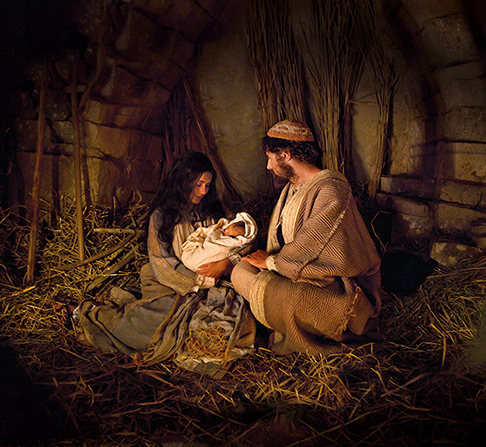
The Lamb being slain from the foundation of the world means that the crucifixion of Jesus Christ was planned from before the world was and Enoch was privileged to see that it would, indeed, happen. He had hope for peace and the joy we will feel for eternity because of God's loving plan and our Savior's love and determination to endure through His essential offering as part of that plan. We are in the season to remember the birth that occurred long ago in the past, rather than from the view from before that Enoch had of it. We have witnesses in scripture and through the Holy Ghost that can give us comfort. But we must each CHOOSE to be comforted. We need to trust, believe, and accept that great Gift. I wish all a very Merry, peaceful, sweet Christmas.
And Jacob rent his clothes, and put sackcloth upon his loins, and mourned for his son many days. All his sons and all his daughters rose up to comfort him; but he refused to be comforted; and he said, For I will go down into the grave unto my son mourning... Genesis 37:34-35
Thus saith the Lord; A voice was heard in Ramah, lamentation and bitter weeping; Rahel weeping for her children refused to be comforted for her children, because they were not. Jeremiah 31:15
He (Coriantumr) began to repent of the evil which he had done; he began to remember the words which had been spoken by the mouth of all the prophets, and he saw them that that were fulfilled thus far, every whit; and his soul mourned and refused to be comforted. (Ether 15:3)
There are even more instances of the Lord offering comfort. There is certainly much need of comfort in this world due to hatred, war, mistreatment, injustice, illness, injury, and on and on. There is not a human on the face of the Earth who has not experienced pain and sorrow. But that's the way it's supposed to be! Shocking as it is to acknowledge that, it's true. For it must needs be, that there is an opposition in all things. (2 Nephi 2:11) It's easy enough to figure out why that is. How can you understand and feel peace if you have never experienced dissension or hatred? How can you comprehend how glorious joy is if you have no idea what sadness is? How can you measure success and accomplishment if you don't know what it means to fail?
So, in this day of wars and rumors of wars, fires, men's hearts turning cold, famine, pestilence, storms, earthquakes, disease, etc., our only reactions are to either harden our hearts to suffering and become part of the problem OR look for a solution. The only solution is from a higher, more experienced and wise Heavenly Parent. Through His Spirit and the gift of His Son, we can be comforted. How? I would recommend a more complete reading of a conversation between the Lord and Enoch, but I will give some highlights:
As Enoch saw this, he had bitterness of soul, and wept over his brethren, and said unto the heavens: I will refuse to be comforted; but the Lord said unto Enoch: Lift up your heart, and be glad; and look. And it came to pass that Enoch looked; and from Noah, he beheld all the families of the earth; and he cried unto the Lord, saying: When shall the day of the Lord come? When shall the blood of the Righteous be shed, that all they that mourn may be sanctified and have eternal life? (referring to the Savior and His Atonement- this was before His mortal life) And the Lord said: It shall be in the meridian of time, in the days of wickedness and vengeance. And behold, Enoch saw the day of the coming of the Son of Man, even in the flesh; and his soul rejoiced, saying: The Righteous is lifted up, and the Lamb is slain from the foundation of the world; and through faith I am in the bosom of the Father, and behold, Zion is with me. (Moses 7:44-47)
The Lamb being slain from the foundation of the world means that the crucifixion of Jesus Christ was planned from before the world was and Enoch was privileged to see that it would, indeed, happen. He had hope for peace and the joy we will feel for eternity because of God's loving plan and our Savior's love and determination to endure through His essential offering as part of that plan. We are in the season to remember the birth that occurred long ago in the past, rather than from the view from before that Enoch had of it. We have witnesses in scripture and through the Holy Ghost that can give us comfort. But we must each CHOOSE to be comforted. We need to trust, believe, and accept that great Gift. I wish all a very Merry, peaceful, sweet Christmas.
Wednesday, December 13, 2017
Corruptible and incorruptible
Only those who are foolish would deny the wisdom of having laws. The problem that we face on Earth as mortals is that, because we lack wisdom, we are shallow in our thinking. We see only what we can see through the experiences we have had, even though we may recognize that every single person with whom we share the planet has had other experiences so their perspectives (wisdom and truth) are all different. Whenever there are laws, in order to be effective, there must be consequences to disobedience or compliance. Consequences are rarely immediate. Many criminals live years before they "get caught". I am truly sorry that our legislators are subject to lack of insight and wrongful influence so the laws they create may be skewed, incomplete, even hazardous to the common good. I am also sorry that those who volunteer or are assigned the job of enforcing the consequences for disobedience to laws are also imperfect. They can be greatly biased or even lacking experience and knowledge.
Now that the world is more and more hooked into this unseen force for good or evil that we call "the internet" we are all exposed to lies and truth with no way to discern the difference. We are all exposed to hatred that may be promoted by anything from total lies to simple ignorance. We may even participate by unknowingly passing on false information because it either aligns with our own opinion or it may just be shocking and we feel others may not be "aware". There are frequent rumors of taxing or controlling/censuring the internet. I don't know how close anyone is to that. There may well be countries where the internet is very much controlled and manipulated, either by those who think they are concerned for the "common good" or by those who lust for power. I am grateful to live in a country that continues to be relatively free. Freedom allows us to choose what to believe, who to listen to, and what to do about it. The one thing lacking is how to know who is telling the truth.
I realize there are many who might disagree with me, but I believe there is a way to know truth in things most important to us. I believe in a higher power that could control everyone and everything. He chooses not to because He wants us to be whoever we want to be. He knows ALL the truth and can and wants to share it with us, if we truly want to know- enough to pay the price. His price for truth is to trust Him. That is difficult for many reasons: we can't see Him right now with our mortal eyes or hear Him with our mortal ears (that would remove faith which is a choice in deciding what we think is right- a major purpose in being here), as well as witnessing such a mess in the world of anger, hatred, unfairness, evil, pain, sorrow, and constant suffering. How can God allow all that if He truly exists, is so powerful, and loves us?? Simple- He's not causing it- we are. He can help us through it, if we ask. He can guide us around obstacles when it is honestly in our best interest. Sometimes the pain and suffering can teach us in a way no lecture could ever do. I'm reminded of the looks on faces: when someone who has experienced great sorrow with the death or grave illness or handicap of a child talks to someone who has experienced that kind of heartache- there is true empathy or at least sympathy. When someone who has felt frustrated with their own limitations there is a very different reaction when told to someone who has always had abilities or someone to catch them when they fell from someone who has "been there".
EVERYONE on this planet is corruptible, just in varying degrees. The only incorruptible source for making and enforcing laws is Jesus Christ and our Father in Heaven. If we want truth and wisdom, that's our best source.
Now that the world is more and more hooked into this unseen force for good or evil that we call "the internet" we are all exposed to lies and truth with no way to discern the difference. We are all exposed to hatred that may be promoted by anything from total lies to simple ignorance. We may even participate by unknowingly passing on false information because it either aligns with our own opinion or it may just be shocking and we feel others may not be "aware". There are frequent rumors of taxing or controlling/censuring the internet. I don't know how close anyone is to that. There may well be countries where the internet is very much controlled and manipulated, either by those who think they are concerned for the "common good" or by those who lust for power. I am grateful to live in a country that continues to be relatively free. Freedom allows us to choose what to believe, who to listen to, and what to do about it. The one thing lacking is how to know who is telling the truth.
I realize there are many who might disagree with me, but I believe there is a way to know truth in things most important to us. I believe in a higher power that could control everyone and everything. He chooses not to because He wants us to be whoever we want to be. He knows ALL the truth and can and wants to share it with us, if we truly want to know- enough to pay the price. His price for truth is to trust Him. That is difficult for many reasons: we can't see Him right now with our mortal eyes or hear Him with our mortal ears (that would remove faith which is a choice in deciding what we think is right- a major purpose in being here), as well as witnessing such a mess in the world of anger, hatred, unfairness, evil, pain, sorrow, and constant suffering. How can God allow all that if He truly exists, is so powerful, and loves us?? Simple- He's not causing it- we are. He can help us through it, if we ask. He can guide us around obstacles when it is honestly in our best interest. Sometimes the pain and suffering can teach us in a way no lecture could ever do. I'm reminded of the looks on faces: when someone who has experienced great sorrow with the death or grave illness or handicap of a child talks to someone who has experienced that kind of heartache- there is true empathy or at least sympathy. When someone who has felt frustrated with their own limitations there is a very different reaction when told to someone who has always had abilities or someone to catch them when they fell from someone who has "been there".
EVERYONE on this planet is corruptible, just in varying degrees. The only incorruptible source for making and enforcing laws is Jesus Christ and our Father in Heaven. If we want truth and wisdom, that's our best source.
Tuesday, December 12, 2017
Finishing a discussion of covenants
( Because of my technological inabilities, I had to end the last post and start another because I didn't know how to get out of that funny colored text! )
As for temple covenants- the reasons LDS members do and should attend the temple regularly are
1- to complete ordinances for deceased ancestors who did not have the opportunity in life
2- to remind themselves of the covenants made- both their own responsibilities and God's promises
3- "This work is a prelude to the work that will consume society during the millenium. This is why it is so vital that we routinely remind ourselves how important temple work is, and how critical the temple covenants are, both to us and to those who have already gone through the veil." from LDS Living, written by Kelly Merrill
So, basically, among other things, we need to remember that we have promised:
*to take care of each other (mourn with those that mourn, share burdens, etc)
*to follow the example of our Savior in all that we do, say, and think (this will take our lifetime to achieve but we need to start wherever we are and keep working on it)
*to remain chaste, modest, and true to our spouse
*to respect others and refrain from being rude and loudly critical, especially of those in leadership positions (not that we can't disagree, but it's important to approach disagreements with anyone from a family member to a ward member to a world leader with respect and clarity)
*to be willing to sacrifice whatever the Lord would want or need of us (Take up your cross and follow me.)
None of what we covenant is shocking or brainwashing or limiting us from having our own freedom to choose. But if we CHOOSE to make a covenant with the Lord, we have to remember that every blessing we expect from Him requires a behavior on our part- it's only fair.It's just not right or logical to live however we want to then turn to our Father in Heaven, desperately in need and demanding His power and good will, when things done our own way don't work out like we planned. God has all-power and can give us everything, which is a lot. But He needs to know He can trust us with the power that He has so we can create the good He does. It's no small detail in our life.
As for temple covenants- the reasons LDS members do and should attend the temple regularly are
1- to complete ordinances for deceased ancestors who did not have the opportunity in life
2- to remind themselves of the covenants made- both their own responsibilities and God's promises
3- "This work is a prelude to the work that will consume society during the millenium. This is why it is so vital that we routinely remind ourselves how important temple work is, and how critical the temple covenants are, both to us and to those who have already gone through the veil." from LDS Living, written by Kelly Merrill
So, basically, among other things, we need to remember that we have promised:
*to take care of each other (mourn with those that mourn, share burdens, etc)
*to follow the example of our Savior in all that we do, say, and think (this will take our lifetime to achieve but we need to start wherever we are and keep working on it)
*to remain chaste, modest, and true to our spouse
*to respect others and refrain from being rude and loudly critical, especially of those in leadership positions (not that we can't disagree, but it's important to approach disagreements with anyone from a family member to a ward member to a world leader with respect and clarity)
*to be willing to sacrifice whatever the Lord would want or need of us (Take up your cross and follow me.)
None of what we covenant is shocking or brainwashing or limiting us from having our own freedom to choose. But if we CHOOSE to make a covenant with the Lord, we have to remember that every blessing we expect from Him requires a behavior on our part- it's only fair.It's just not right or logical to live however we want to then turn to our Father in Heaven, desperately in need and demanding His power and good will, when things done our own way don't work out like we planned. God has all-power and can give us everything, which is a lot. But He needs to know He can trust us with the power that He has so we can create the good He does. It's no small detail in our life.
Covenants in the templ
In the Old Testament, there is mentioned the ordinance of anointing with oil. This is available today in LDS temples. So much of our relationship with God involves "symbols" and might therefore be obscure to us as we live in these mortal bodies with limitations. The mortal Jesus taught in parables and symbols and repeated the basic admonition, "Let those who have ears, hear, and those with eyes, see" meaning that only those who have a sincere desire to understand Him because they believe Him and want to follow Him will have the tools to do so.
The first covenants we participate in when in the temple involve symbolic washing away the influence of the world to be clean and pure, then being anointed which involves lots of blessings promised by the Lord. Then we proceed to our endowment and I will use quotes to explain:
Let me give you a definition in brief. Your endowment is, to receive all those ordinances in the House of the Lord, which are necessary for you, after you have departed this life, to enable you to walk back to the presence of the Father, passing the angels who stand as sentinels, being able to give them the key words, the signs and tokens, pertaining to the holy Priesthood, and gain your eternal exaltation in spite of earth and hell. (Discourses of Brigham Young, comp. John A. Widtsoe [Salt Lake City: Deseret Book Co., 1971], page 416.)
he Temple Endowment, as administered in modern temples, comprises instruction relating to the significance and sequence of past dispensations, and the importance of the present as the greatest and grandest era in human history. This course of instruction includes a recital of the most prominent events of the creative period, the condition of our first parents in the Garden of Eden, their disobedience and consequent expulsion from that blissful abode, their condition in the lone and dreary world when doomed to live by labor and sweat, the plan of redemption by which the great transgression may be atoned, the period of the great apostasy, the restoration of the Gospel with all its ancient powers and privileges, the absolute and indispensable condition of personal purity and devotion to the right in present life, and a strict compliance with Gospel requirements. (James E. Talmage, The House of the Lord [Salt Lake City: Bookcraft, 1962], pages 99–100; hereafter cited as The House of the Lord.)
The first covenants we participate in when in the temple involve symbolic washing away the influence of the world to be clean and pure, then being anointed which involves lots of blessings promised by the Lord. Then we proceed to our endowment and I will use quotes to explain:
Let me give you a definition in brief. Your endowment is, to receive all those ordinances in the House of the Lord, which are necessary for you, after you have departed this life, to enable you to walk back to the presence of the Father, passing the angels who stand as sentinels, being able to give them the key words, the signs and tokens, pertaining to the holy Priesthood, and gain your eternal exaltation in spite of earth and hell. (Discourses of Brigham Young, comp. John A. Widtsoe [Salt Lake City: Deseret Book Co., 1971], page 416.)
he Temple Endowment, as administered in modern temples, comprises instruction relating to the significance and sequence of past dispensations, and the importance of the present as the greatest and grandest era in human history. This course of instruction includes a recital of the most prominent events of the creative period, the condition of our first parents in the Garden of Eden, their disobedience and consequent expulsion from that blissful abode, their condition in the lone and dreary world when doomed to live by labor and sweat, the plan of redemption by which the great transgression may be atoned, the period of the great apostasy, the restoration of the Gospel with all its ancient powers and privileges, the absolute and indispensable condition of personal purity and devotion to the right in present life, and a strict compliance with Gospel requirements. (James E. Talmage, The House of the Lord [Salt Lake City: Bookcraft, 1962], pages 99–100; hereafter cited as The House of the Lord.)
Sunday, December 10, 2017
Covenants in the House of the Lord
( I don't really understand why the last blog I did ended up multi-colored. I am still technologically inept. I'm sorry if it bothers anyone trying to read it.)
I want to continue some general comments going on from covenants made at baptism and confirmation and renewal at sacrament to covenants made in the Lord's House- in temples. President Hinckley was quite concerned that temples be more available for everyone who desires to make deeper covenants and feel closer to Heavenly Father. There are now over 150 operating temples all over the globe. As a prophet of God, he was determined to do all he could to prepare for the return of the Savior to rule and reign. He said, "These unique and wonderful buildings, and the ordinances administered therein, represent the ultimate in our worship. These ordinances become the most profound expressions of our theology..... Here, under the authority of the Holy Priesthood, will be administered those ordinances which lead not only to salvation, but also to eternal exaltation." Also, "The blessings of the temple for both men and women who are worthy to enter therein... include our washings and anointings that we may be clean before the Lord. They include the instruction service in which we are given an endowment of obligations and blessings that motivate us to behavior compatible with the principles of the gospel. They include the sealing ordinances by which that which is bound on earth is bound in heaven, providing for the continuity of the family."
This from an LDS Living article written by Kelly Merrill: "This work is a prelude to the work that will consume society during the millenium. This is why it is so vital that we routinely remind ourselves how important temple work is, and how critical the temple covenants are, both to us and to those who have already gone through the veil."
In church, Sunday meetings as well as other meetings, we teach each other and learn from each other through study and discussion of the words of prophets. We help each other to understand the nature of God, the meaning of the Atonement of our Savior, and principles God wants us to understand and follow in order to more quickly be worthy to stand in His presence. In the temple, the learning we do is more direct. We are given blessings, admonitions, and make covenants that all guide us to follow the Savior. As we repeat ordinances as proxy for deceased extended family, we are available to learn directly from the third member of the Godhead- the Holy Ghost. Anyone can enter a church or meetinghouse and ALL are invited to do so. Entering the Lord's house or temple requires more sincerity in making an effort to repent and to be obedient.
You must possess a current recommend to be admitted to the temple. This recommend must be signed by the bishop of your ward and the president of your stake. In the mission field, of course, the branch president and the mission president have responsibility for issuing temple recommends. Only those who are worthy should go to the temple. The bishop has the responsibility of making inquiries into our personal worthiness. This interview is of great importance to you as a member of the Church, for it is an occasion to explore with an ordained servant of the Lord the pattern of your life. If anything is amiss in your life, the bishop will be able to help you resolve it. Through this procedure, as you counsel with the common judge in Israel, you can declare or can be helped to establish your worthiness to enter the temple with the Lord’s approval. (from LDS.org manual for preparing to enter the temple)
I want to continue some general comments going on from covenants made at baptism and confirmation and renewal at sacrament to covenants made in the Lord's House- in temples. President Hinckley was quite concerned that temples be more available for everyone who desires to make deeper covenants and feel closer to Heavenly Father. There are now over 150 operating temples all over the globe. As a prophet of God, he was determined to do all he could to prepare for the return of the Savior to rule and reign. He said, "These unique and wonderful buildings, and the ordinances administered therein, represent the ultimate in our worship. These ordinances become the most profound expressions of our theology..... Here, under the authority of the Holy Priesthood, will be administered those ordinances which lead not only to salvation, but also to eternal exaltation." Also, "The blessings of the temple for both men and women who are worthy to enter therein... include our washings and anointings that we may be clean before the Lord. They include the instruction service in which we are given an endowment of obligations and blessings that motivate us to behavior compatible with the principles of the gospel. They include the sealing ordinances by which that which is bound on earth is bound in heaven, providing for the continuity of the family."
This from an LDS Living article written by Kelly Merrill: "This work is a prelude to the work that will consume society during the millenium. This is why it is so vital that we routinely remind ourselves how important temple work is, and how critical the temple covenants are, both to us and to those who have already gone through the veil."
In church, Sunday meetings as well as other meetings, we teach each other and learn from each other through study and discussion of the words of prophets. We help each other to understand the nature of God, the meaning of the Atonement of our Savior, and principles God wants us to understand and follow in order to more quickly be worthy to stand in His presence. In the temple, the learning we do is more direct. We are given blessings, admonitions, and make covenants that all guide us to follow the Savior. As we repeat ordinances as proxy for deceased extended family, we are available to learn directly from the third member of the Godhead- the Holy Ghost. Anyone can enter a church or meetinghouse and ALL are invited to do so. Entering the Lord's house or temple requires more sincerity in making an effort to repent and to be obedient.
You must possess a current recommend to be admitted to the temple. This recommend must be signed by the bishop of your ward and the president of your stake. In the mission field, of course, the branch president and the mission president have responsibility for issuing temple recommends. Only those who are worthy should go to the temple. The bishop has the responsibility of making inquiries into our personal worthiness. This interview is of great importance to you as a member of the Church, for it is an occasion to explore with an ordained servant of the Lord the pattern of your life. If anything is amiss in your life, the bishop will be able to help you resolve it. Through this procedure, as you counsel with the common judge in Israel, you can declare or can be helped to establish your worthiness to enter the temple with the Lord’s approval. (from LDS.org manual for preparing to enter the temple)
Saturday, December 09, 2017
Covenants: Preparing to enter the house of the Lord
Whenever the Lord has had a people on the earth who will obey His word, they have been commanded to build temples in which the ordinances of the gospel and other spiritual manifestations that pertain to exaltation and eternal life may be administered. In cases of extreme poverty or emergency, these ordinances may sometimes be done on a mountaintop (see D&C 124:37–55). This may be the case with Mount Sinai and the Mount of Transfiguration. The tabernacle erected by Moses was a type of portable temple, since the Israelites were traveling in the wilderness. (LDS Bible Dictionary)
And thou shalt bring Aaron and his sons unto the door of the tabernacle of congregation and wash them with water, And thou shalt put upon Aaron the holy garments, and anoint him and sanctify him... (Exodus 40:12-13)
Since the temple built by Solomon in all its grandeur and glory, there were no Houses of the Lord until the Lord commanded Joseph Smith, in the 1800's, to build a house for Him. The Lord expects anyone entering His presence to be cleansed. No unclean thing can dwell with God. (1 Ne 10:21) Once we have chosen to covenant, as evidenced by being baptized, with God, it is not a "done deal" that no more is expected of us until we die and are resurrected. We have an opportunity to continue to learn and progress and even enter the Lord's presence.
Temples are literally houses of the Lord. They are holy places of worship where individuals make sacred covenants with God. Because making covenants with God is such a solemn responsibility, individuals cannot enter the temple to receive their endowments or be sealed in marriage for eternity until they have fully prepared themselves and been members of the Church for at least a year. (LDS.Org, topic "Temples")
All of God's children will continue to progress through eternity and we will retain everything we gain in the way of learning truth and God's principles during our mortal life. Making covenants is a way of showing God our sincere desire to obey His and strive to be like Him and His Son. I am so grateful that my Heavenly Father believes in me enough to trust me with the light He wants to share with all of His children as soon as they are willing. I am far from being like my Savior but I believe that His admonitions to follow Him mean that I can.
And thou shalt bring Aaron and his sons unto the door of the tabernacle of congregation and wash them with water, And thou shalt put upon Aaron the holy garments, and anoint him and sanctify him... (Exodus 40:12-13)
Since the temple built by Solomon in all its grandeur and glory, there were no Houses of the Lord until the Lord commanded Joseph Smith, in the 1800's, to build a house for Him. The Lord expects anyone entering His presence to be cleansed. No unclean thing can dwell with God. (1 Ne 10:21) Once we have chosen to covenant, as evidenced by being baptized, with God, it is not a "done deal" that no more is expected of us until we die and are resurrected. We have an opportunity to continue to learn and progress and even enter the Lord's presence.
Temples are literally houses of the Lord. They are holy places of worship where individuals make sacred covenants with God. Because making covenants with God is such a solemn responsibility, individuals cannot enter the temple to receive their endowments or be sealed in marriage for eternity until they have fully prepared themselves and been members of the Church for at least a year. (LDS.Org, topic "Temples")
All of God's children will continue to progress through eternity and we will retain everything we gain in the way of learning truth and God's principles during our mortal life. Making covenants is a way of showing God our sincere desire to obey His and strive to be like Him and His Son. I am so grateful that my Heavenly Father believes in me enough to trust me with the light He wants to share with all of His children as soon as they are willing. I am far from being like my Savior but I believe that His admonitions to follow Him mean that I can.
Thursday, December 07, 2017
Covenants: weekly renewal
Near the end of our Savior's mortal ministry, he instituted the ordinance we call "the sacrament" which is partaking of wine/water and bread "in remembrance" of Him. Today it is done in a variety of ways by various religious groups. The main purpose continues to be to remember: remember Jesus Christ, what He did for every single one of the people on this planet and to remember our own covenants that we made when baptized. There are countless scriptures referring to it. I am going to give a couple of quotes from people today which are not available in our canonized scriptures.
What does the name of Christ and that covenant mean? The most frequent single meaning of the scriptures that refer to the name of the Lord seem to mean the work of the Lord- His work, His atonement, His mission..... Everyone who covenants that they are willing to take upon them the name of Christ is saying 'I will handle my share of that great mission, and my share is what I am called to do.' (Dallin H. Oaks, currently serving as one of the Twelve Apostles)
"In many denominations, it would be thought odd that the sacrament of the Lord's supper is offered every week. Yet the Latter Day Saints know that imperfect beings must regularly reaffirm their personal goal of perfection, being justified in the meaning by the atonement of Christ. Accordingly, each week we come before the Lord as we prepare for the sacrament and say essentially, 'Heavenly Father, I wasn't perfect again this week, but I repent of my sins and reaffirm my commitment to keep all the commandments. I promise to go back and try again with all my heart, might, mind, and strength. I still want and need the cleansing that comes through faith, repentance, and baptism. Please extend my contract, my covenant of baptism, and grant me the continued blessings of the Atonement and the companionship of the Holy Ghost.' " (Stephen E. Robinson)
I wish it weren't as easy as it is to forget something so important as a covenant with God.... but it is. Despite our best efforts, we get caught up in the world we can see, touch, hear, and feel with our mortal senses. I am grateful for a weekly reminder of who I am, what I have promised, where I am going from here, and who is at the other end.
What does the name of Christ and that covenant mean? The most frequent single meaning of the scriptures that refer to the name of the Lord seem to mean the work of the Lord- His work, His atonement, His mission..... Everyone who covenants that they are willing to take upon them the name of Christ is saying 'I will handle my share of that great mission, and my share is what I am called to do.' (Dallin H. Oaks, currently serving as one of the Twelve Apostles)
"In many denominations, it would be thought odd that the sacrament of the Lord's supper is offered every week. Yet the Latter Day Saints know that imperfect beings must regularly reaffirm their personal goal of perfection, being justified in the meaning by the atonement of Christ. Accordingly, each week we come before the Lord as we prepare for the sacrament and say essentially, 'Heavenly Father, I wasn't perfect again this week, but I repent of my sins and reaffirm my commitment to keep all the commandments. I promise to go back and try again with all my heart, might, mind, and strength. I still want and need the cleansing that comes through faith, repentance, and baptism. Please extend my contract, my covenant of baptism, and grant me the continued blessings of the Atonement and the companionship of the Holy Ghost.' " (Stephen E. Robinson)
I wish it weren't as easy as it is to forget something so important as a covenant with God.... but it is. Despite our best efforts, we get caught up in the world we can see, touch, hear, and feel with our mortal senses. I am grateful for a weekly reminder of who I am, what I have promised, where I am going from here, and who is at the other end.
Tuesday, December 05, 2017
Covenants: Baptism by water and fire
Making a covenant, or serious agreement or contract, involves input and expectations from all parties. If we consider only what we want from God without being willing to listen to His expectations for us, it isn't really a covenant; it's only a demand that we make to receive something we want from Him. Is it really fair to expect such one-sidedness? So, we pursue baptism because that is one of God's stipulations: And the Father said: Repent ye, repent ye, and be baptized in the name of my Beloved Son. (2 Ne 31:11) In the LDS Bible Dictionary is this clarification: Baptism is not optional if one wishes the fullness of salvation. Jesus said a person must be born of water and of the Spirit (John 3:3-5). When he sent the twelve apostles forth to teach the gospel he told them that whosoever believed and was baptized would be saved; and whosoever did not believe would be damned. (Mark 16:16)..... Baptism symbolizes death, burial, and resurrection, and can only be done by immersion. Many Christians have been troubled by the lack of opportunity millions of people have suffered when not being given the option of being baptized then dying without it. There have been various attempts to explain how God can love ALL of His children and be fair and just, but condemn the unbaptized. Paul (in the New Testament) in his first letter to the Corinthians refers to how this is resolved: Else what shall they do which are baptized for the dead, if the dead rise not at all? why are they then baptized for the dead? (1 Cor. 15:29) Baptisms and confirmations (gift of the Holy Ghost) for those who fit this category are done in LDS temples all over the world. Those in the spirit world are not required to accept proxy ordinances but, if they desire it, the ordinance is performed when they can no longer do it because they no longer have a physical body and won't have until after resurrection. It's likely, due to the vast number of earth-inhabiting children of God, there will be some who need to be baptized after they have received their resurrected body. (That will occur during the Millenium.) In temples today, we are only trying to assist in this work by searching out our own kindred dead and performing ordinances that allow them to make covenants required by God.
Matthew recorded John the Baptist: I indeed baptize you with water unto repentance: but he that cometh after me is mightier than I, whose shoes I am not worthy to bear: he shall baptize you with the Holy Ghost, and with fire (Matt. 3:11) In the Book of Mormon, 2 Nephi 31:12 is recorded: And also, the voice of the Son came unto me, saying: He that is baptized in my name, to him will the Father give the Holy Ghost, like unto me; wherefore, follow me and do the things which ye have seen me do. Again I refer to the Bible Dictionary for the clearest explanation of the identity of the Holy Ghost: The third member of the Godhead and, as the name implies, a personage of Spirit, not possessing a body of flesh and bones. The Holy Ghost has been manifest in every dispensation of the gospel since the beginning, being first made known to Adam. The Holy Ghost is manifested to men on the earth both as the power of the Holy Ghost and as the gift of the Holy Ghost. The power can come upon one before baptism, and is the convincing witness that the gospel is true.... The gift can come only after proper and authorized baptism, and is conferred by the laying on of hands. It came upon a large group of early followers of Christ on what is known as the "Day of Pentecost". Even after having been given it as a gift by one having authority to do so, the receiver must remain worthy of Its presence. The Lord (or His representative) dwelleth not in unholy temples. (Mosiah 2:37) If we are given a gift and choose not to use it or treat it with respect, there is no purpose in our having that gift. That works just like any contract, when one party breaks the agreement, the contract is null and void.
Matthew recorded John the Baptist: I indeed baptize you with water unto repentance: but he that cometh after me is mightier than I, whose shoes I am not worthy to bear: he shall baptize you with the Holy Ghost, and with fire (Matt. 3:11) In the Book of Mormon, 2 Nephi 31:12 is recorded: And also, the voice of the Son came unto me, saying: He that is baptized in my name, to him will the Father give the Holy Ghost, like unto me; wherefore, follow me and do the things which ye have seen me do. Again I refer to the Bible Dictionary for the clearest explanation of the identity of the Holy Ghost: The third member of the Godhead and, as the name implies, a personage of Spirit, not possessing a body of flesh and bones. The Holy Ghost has been manifest in every dispensation of the gospel since the beginning, being first made known to Adam. The Holy Ghost is manifested to men on the earth both as the power of the Holy Ghost and as the gift of the Holy Ghost. The power can come upon one before baptism, and is the convincing witness that the gospel is true.... The gift can come only after proper and authorized baptism, and is conferred by the laying on of hands. It came upon a large group of early followers of Christ on what is known as the "Day of Pentecost". Even after having been given it as a gift by one having authority to do so, the receiver must remain worthy of Its presence. The Lord (or His representative) dwelleth not in unholy temples. (Mosiah 2:37) If we are given a gift and choose not to use it or treat it with respect, there is no purpose in our having that gift. That works just like any contract, when one party breaks the agreement, the contract is null and void.
Monday, December 04, 2017
Covenants: faith and repentance
"Covenants with God are serious and solemn...A covenant becomes a pledge of self... When a man makes a covenant, he is holding himself, like water, in his cupped hands. And if he opens his fingers he need not hope to find himself again. A covenant-breaker no longer has a self to commit or a guarantee to offer." (Dale Renlund Sept. 2017 Ensign, conference issue)
The 4th Article of Faith of the LDS Church states, "The first principles and ordinances of the gospel are, first, faith in the Lord Jesus Christ, second repentance, third baptism by immersion for the remission of sins, fourth laying on of hands for the gift of the Holy Ghost."
As I consider the covenants we make with God, I will start with the very first step, which is faith. Faith is a belief in something you cannot necessarily see or touch or sense with your physical faculties. It is a belief, strong enough, to cause a change in you- not just a temporary awe due to witnessing a "miracle", not just a temporary desperation caused by a need to call upon a higher power when you are in a difficult situation and have no one else to turn to, and not just a declaration that you believe God and Jesus Christ exist. Faith is a decision to take a specific path in your goals, actions, and desires. Faith, like any decision we may make, can waver at times. We can have doubts and fears that cause us to think maybe God isn't really there or He doesn't really care about us. Faith at its best gives us what Jesus calls, "a peace which passeth all understanding"- basically meaning that we don't feel anxiety because we deeply believe God is aware of us and cares and will work things out whatever way He determines is best- even know in the same way you know the sun will rise in the morning because you have witnessed it before or in the same way you know that someone loves you even when they may be angry at you or disappointed in you for the moment. We can choose to scoff at the idea that , just because the sun was there yesterday, doesn't mean it will be back in the sky again. Or we can decide we don't believe in the love of another or that they have lost whatever love they had in the past. So, FAITH is a decision to believe, wholeheartedly with no intention of turning back. Some words from the LDS Bible Dictionary on faith: faith is a principle of action and of power..... by faith one obtains a remission of sins and eventually can stand in the presence of God. All true faith must be based upon correct knowledge or it cannot produce the desired results..... Although faith is a gift, it must be cultured and sought after until it grows..." I could go on endlessly quoting scriptures and wise words about the essence of faith, but it's basically a choice to strongly believe.
The second principle as we pursue covenants with God is repentance. Repentance is NOT just feeling sorry. Worldly sorrow is when you get caught or punished and you don't really feel bad for what you did or thought, you just wish things were different. Godly sorrow is when you fully recognize your own faults and weaknesses,recognize your own responsibility to do something about it and have a deep desire to CHANGE so you won't be likely to continue making the same errors (sins). Repentance can be seen as difficult because it's really a big step to honestly assess yourself and be willing to admit flaws. It's also difficult to decide to be different than you are currently. But true repentance is actually healing; it's re-forming yourself into an improved version. It's the ultimate success to become better. God, as any loving parent, wants to see us grow up and be better. He is more than willing to help us if we sincerely desire to improve. He can't just do it for us any more than a good parent can take a math test for their child so they get a good grade. He can encourage us- through words of prophets and the tender voice of the Holy Ghost. He can help us- through promptings and sometimes putting a person or article or remembrance in our path. He can comfort us when the trying wearies us. He gave His Only Begotten Son to be ridiculed, hated, scorned, spit on, tortured, and crucified so that we can be eligible to meet the demands of eternal justice and healed from our pains and sorrows. Growing, learning, and improving is mostly uncomfortable when we don't sincerely want to do it, but are only doing it to compete with others or impress others or feel it a duty.
To be who we truly want to be is to decide for ourselves that we want to pursue an ideal. If God or Jesus Christ stood in front of you and told you exactly what to do and say and think every second, would that be YOU?? They want us to be like Them- "perfect"- but only by our choice and growth.
The 4th Article of Faith of the LDS Church states, "The first principles and ordinances of the gospel are, first, faith in the Lord Jesus Christ, second repentance, third baptism by immersion for the remission of sins, fourth laying on of hands for the gift of the Holy Ghost."
As I consider the covenants we make with God, I will start with the very first step, which is faith. Faith is a belief in something you cannot necessarily see or touch or sense with your physical faculties. It is a belief, strong enough, to cause a change in you- not just a temporary awe due to witnessing a "miracle", not just a temporary desperation caused by a need to call upon a higher power when you are in a difficult situation and have no one else to turn to, and not just a declaration that you believe God and Jesus Christ exist. Faith is a decision to take a specific path in your goals, actions, and desires. Faith, like any decision we may make, can waver at times. We can have doubts and fears that cause us to think maybe God isn't really there or He doesn't really care about us. Faith at its best gives us what Jesus calls, "a peace which passeth all understanding"- basically meaning that we don't feel anxiety because we deeply believe God is aware of us and cares and will work things out whatever way He determines is best- even know in the same way you know the sun will rise in the morning because you have witnessed it before or in the same way you know that someone loves you even when they may be angry at you or disappointed in you for the moment. We can choose to scoff at the idea that , just because the sun was there yesterday, doesn't mean it will be back in the sky again. Or we can decide we don't believe in the love of another or that they have lost whatever love they had in the past. So, FAITH is a decision to believe, wholeheartedly with no intention of turning back. Some words from the LDS Bible Dictionary on faith: faith is a principle of action and of power..... by faith one obtains a remission of sins and eventually can stand in the presence of God. All true faith must be based upon correct knowledge or it cannot produce the desired results..... Although faith is a gift, it must be cultured and sought after until it grows..." I could go on endlessly quoting scriptures and wise words about the essence of faith, but it's basically a choice to strongly believe.
The second principle as we pursue covenants with God is repentance. Repentance is NOT just feeling sorry. Worldly sorrow is when you get caught or punished and you don't really feel bad for what you did or thought, you just wish things were different. Godly sorrow is when you fully recognize your own faults and weaknesses,recognize your own responsibility to do something about it and have a deep desire to CHANGE so you won't be likely to continue making the same errors (sins). Repentance can be seen as difficult because it's really a big step to honestly assess yourself and be willing to admit flaws. It's also difficult to decide to be different than you are currently. But true repentance is actually healing; it's re-forming yourself into an improved version. It's the ultimate success to become better. God, as any loving parent, wants to see us grow up and be better. He is more than willing to help us if we sincerely desire to improve. He can't just do it for us any more than a good parent can take a math test for their child so they get a good grade. He can encourage us- through words of prophets and the tender voice of the Holy Ghost. He can help us- through promptings and sometimes putting a person or article or remembrance in our path. He can comfort us when the trying wearies us. He gave His Only Begotten Son to be ridiculed, hated, scorned, spit on, tortured, and crucified so that we can be eligible to meet the demands of eternal justice and healed from our pains and sorrows. Growing, learning, and improving is mostly uncomfortable when we don't sincerely want to do it, but are only doing it to compete with others or impress others or feel it a duty.
To be who we truly want to be is to decide for ourselves that we want to pursue an ideal. If God or Jesus Christ stood in front of you and told you exactly what to do and say and think every second, would that be YOU?? They want us to be like Them- "perfect"- but only by our choice and growth.
Subscribe to:
Posts (Atom)