I was reading scriptures while in the temple and found this great explanation of how we should view "authority". Paul was a very philosophical man which can probably be attributed to his deep study of the Jewish religion, his heavenly visit which had a dynamic affect on him, then his continued deep study with a greater awareness of the giver of laws. In his letter to the Romans(13th chapter) who were generally well-educated, he had this to say:
Let every soul be subject unto the higher powers. For there is no power in the church but of God; the powers that be are ordained of God. Whosoever resisteth the power, resisteth the ordinance of God: and they that resist shall receive to themselves damnation. For rulers are no a terror to good works, but to the evil. Wilt thou then not be afraid of the power? do that which is good, and thou shalt have praise of the same: For he is the minister of God to thee for good. But if thou do that which is evil, be afraid; for he beareth not the sword in vain; for he is the minister of God, a revenger to execute wrath upon him that doeth evil. Wherefore ye must needs be subject, not only for wrath, but also for conscience sake.....Owe no man any thing, but to love one another: for he that loveth another hath fulfilled the law.
He lists lots of details about behaviors but this part specifies how to view "Church authority". Now, considering trouble that has been disclosed within the Catholic church due to the unquestioned authority of priests and other leaders, Paul's advice may come into question. However, as in every instance of every human's need to discern, our only real recourse is to ask God. Rather than simply follow and obey as a blind sheep OR rebel and refuse to follow someone we consider an imperfect man, we each need to:
*first, recognize the authority given to an imperfect person realizing that we are also sometimes given authority as responsible for a stewardship (even as simple as parenthood) and need others to be willing to do what they may be asked to do,
* then pray to know for ourselves that what we are asked to do is right. If we truly feel it is not right, then we can approach the authority personally and explain our viewpoint, not in a contentious, accusatory way, but in a sincere desire to assist them in their stewardship.
As Paul states: Whosoever resisteth power, resisteth the ordinance of God. We must recognize when we are challenging a person and when we are challenging God. Whether it's about a general issue such as same sex marriage or a more personal issue like accepting a calling or assignment at church, God will have an opinion and we can go straight to the source and ASK!
Wednesday, December 27, 2017

Tuesday, December 26, 2017
But he's ugly!
It's always interesting to see how science fiction/fantasy non-earthlings are portrayed in movies or comics. They often have a humanoid form with strange hair or appendages. There is an instinctive reaction in us to notice how "attractive" others are. Scientists would probably attribute that to natural selection and propagation of the species. Scientists have also done studies which show that people who might be considered "attractive" are often treated better by clerks, wait-staff, and other strangers. I remember finally maturing to the point when I noticed couples where one or both of the people were not what might be magazine-worthy yet they seemed to be happy and very attentive to each other. At first I wondered, "How can he/she really be interested in a relationship with that person who doesn't appear attractive?" Truly, beauty is in the eyes of the beholder. But, also, there is something to be said for "you can't tell a book by its cover". Most of us have experienced a model-type attractive person who is vain and obnoxious. Most of us have also known a person who isn't quite so "easy on the eyes" that is kind, considerate, helpful, honest, hardworking, etc. There are lots of people who go to great lengths to improve the "cover of their book" by changing hair color, dieting, working out, investing in expensive and extensive wardrobes, and even plastic surgery including botox injections and nose jobs. Why? Is it really all about our concern to propagate? Why do we continue to be so concerned even AFTER having mated with someone willing to accept us as we are at the time? What does it say about our character when we are so affected by a person's outward appearance, even our own? Do we not fully understand the shallowness of our attitude?
I know several people who suffer daily from feeling they don't look "good enough"- some married and some not. The ones who are married often think their partner is just amazing for having "lowered" themselves enough to hook up with such a low-life as themselves. The ones who are not married might be really interested in being married but have convinced themselves that no one is ever going to want them except maybe someone who is even worse than they are! How do we overcome this hang-up?It's obviously shallow, unfair, unrealistic, and just plain wrong. Yet we continue to value people according to their outward appearance.
One way that I have seen people get over it is to have a child, genetically their own or adopted, who has special needs which generally causes them to be somehow misshapen or have an awkward expression or behavior. When you live every day with someone less than beautiful on the outside, you come to better appreciate who people are and not so much what they look like. When you care for an innocent, helpless child all day every day, your love can increase through your service. (That's not always a given. There are some who only develop a resentment, sadly enough.)
Another way I have seen people get over it is to have exposure to one of the "beautiful on the outside" people that is cruel, selfish, pompous, and altogether impossible to get along with. The person can be a boss or other work companion, or a roommate or a family member. You come to realize that beauty truly is often only skin-deep. That helps you when looking at other people around you as well as in the mirror. You're more inclined to look past just what shows on the outside and better appreciate what's on the inside.
As much as it benefits society to have "ugly" people treated more kindly, it benefits every single individual even more. Think about what the world would be like if people no longer judges others by how fashionable their clothes were or how lovely their hair or skin was or how well-shaped they were. I can see vividly in my mind photos from National Geographic of women in Africa stretching their necks higher and higher with neck bands because their culture considers that attractive. There is also the x-rays of women a century and more ago whose spines were distorted from wearing really tight corsets. How about the ancient Oriental women whose feet were so misshapen from being bandaged to stay petite? Also, the countless stabbing with needles for tattoos and piercing of all kinds of places that currently are considered culturally fashionable.... WHY??? We would be so much better off if we could stop ourselves from focusing on the covers of books and take the time to appreciate what's inside- get the whole story. It would make us kinder, more patient people. It would make us better at liking ourselves and accepting what's in the mirror. It's good to look neat, clean, and pleasant but it's really not necessary to be so demanding of whatever the current culture labels as good looking. I think we should work harder at being just plain GOOD.
I know several people who suffer daily from feeling they don't look "good enough"- some married and some not. The ones who are married often think their partner is just amazing for having "lowered" themselves enough to hook up with such a low-life as themselves. The ones who are not married might be really interested in being married but have convinced themselves that no one is ever going to want them except maybe someone who is even worse than they are! How do we overcome this hang-up?It's obviously shallow, unfair, unrealistic, and just plain wrong. Yet we continue to value people according to their outward appearance.
One way that I have seen people get over it is to have a child, genetically their own or adopted, who has special needs which generally causes them to be somehow misshapen or have an awkward expression or behavior. When you live every day with someone less than beautiful on the outside, you come to better appreciate who people are and not so much what they look like. When you care for an innocent, helpless child all day every day, your love can increase through your service. (That's not always a given. There are some who only develop a resentment, sadly enough.)
Another way I have seen people get over it is to have exposure to one of the "beautiful on the outside" people that is cruel, selfish, pompous, and altogether impossible to get along with. The person can be a boss or other work companion, or a roommate or a family member. You come to realize that beauty truly is often only skin-deep. That helps you when looking at other people around you as well as in the mirror. You're more inclined to look past just what shows on the outside and better appreciate what's on the inside.
As much as it benefits society to have "ugly" people treated more kindly, it benefits every single individual even more. Think about what the world would be like if people no longer judges others by how fashionable their clothes were or how lovely their hair or skin was or how well-shaped they were. I can see vividly in my mind photos from National Geographic of women in Africa stretching their necks higher and higher with neck bands because their culture considers that attractive. There is also the x-rays of women a century and more ago whose spines were distorted from wearing really tight corsets. How about the ancient Oriental women whose feet were so misshapen from being bandaged to stay petite? Also, the countless stabbing with needles for tattoos and piercing of all kinds of places that currently are considered culturally fashionable.... WHY??? We would be so much better off if we could stop ourselves from focusing on the covers of books and take the time to appreciate what's inside- get the whole story. It would make us kinder, more patient people. It would make us better at liking ourselves and accepting what's in the mirror. It's good to look neat, clean, and pleasant but it's really not necessary to be so demanding of whatever the current culture labels as good looking. I think we should work harder at being just plain GOOD.
Sunday, December 17, 2017
Will you be comforted?
It is a common human reaction when another creature (human or not) is in pain or sorrowing, to try to comfort it/her/him. I know I tried to teach my children to react in that way and have done my best to do so as well. Just as providing service to others is important and requires a receiver of that service to accept it, you can offer comfort and have it refused. I have seen many instances of a child crying out of fear or pain and absolutely refusing to have someone cuddle and reassure them. They flail and cry in anguish despite the best efforts of anyone trying to comfort them. In the scriptures there are several similar instances:
And Jacob rent his clothes, and put sackcloth upon his loins, and mourned for his son many days. All his sons and all his daughters rose up to comfort him; but he refused to be comforted; and he said, For I will go down into the grave unto my son mourning... Genesis 37:34-35
Thus saith the Lord; A voice was heard in Ramah, lamentation and bitter weeping; Rahel weeping for her children refused to be comforted for her children, because they were not. Jeremiah 31:15
He (Coriantumr) began to repent of the evil which he had done; he began to remember the words which had been spoken by the mouth of all the prophets, and he saw them that that were fulfilled thus far, every whit; and his soul mourned and refused to be comforted. (Ether 15:3)
There are even more instances of the Lord offering comfort. There is certainly much need of comfort in this world due to hatred, war, mistreatment, injustice, illness, injury, and on and on. There is not a human on the face of the Earth who has not experienced pain and sorrow. But that's the way it's supposed to be! Shocking as it is to acknowledge that, it's true. For it must needs be, that there is an opposition in all things. (2 Nephi 2:11) It's easy enough to figure out why that is. How can you understand and feel peace if you have never experienced dissension or hatred? How can you comprehend how glorious joy is if you have no idea what sadness is? How can you measure success and accomplishment if you don't know what it means to fail?
So, in this day of wars and rumors of wars, fires, men's hearts turning cold, famine, pestilence, storms, earthquakes, disease, etc., our only reactions are to either harden our hearts to suffering and become part of the problem OR look for a solution. The only solution is from a higher, more experienced and wise Heavenly Parent. Through His Spirit and the gift of His Son, we can be comforted. How? I would recommend a more complete reading of a conversation between the Lord and Enoch, but I will give some highlights:
As Enoch saw this, he had bitterness of soul, and wept over his brethren, and said unto the heavens: I will refuse to be comforted; but the Lord said unto Enoch: Lift up your heart, and be glad; and look. And it came to pass that Enoch looked; and from Noah, he beheld all the families of the earth; and he cried unto the Lord, saying: When shall the day of the Lord come? When shall the blood of the Righteous be shed, that all they that mourn may be sanctified and have eternal life? (referring to the Savior and His Atonement- this was before His mortal life) And the Lord said: It shall be in the meridian of time, in the days of wickedness and vengeance. And behold, Enoch saw the day of the coming of the Son of Man, even in the flesh; and his soul rejoiced, saying: The Righteous is lifted up, and the Lamb is slain from the foundation of the world; and through faith I am in the bosom of the Father, and behold, Zion is with me. (Moses 7:44-47)
The Lamb being slain from the foundation of the world means that the crucifixion of Jesus Christ was planned from before the world was and Enoch was privileged to see that it would, indeed, happen. He had hope for peace and the joy we will feel for eternity because of God's loving plan and our Savior's love and determination to endure through His essential offering as part of that plan. We are in the season to remember the birth that occurred long ago in the past, rather than from the view from before that Enoch had of it. We have witnesses in scripture and through the Holy Ghost that can give us comfort. But we must each CHOOSE to be comforted. We need to trust, believe, and accept that great Gift. I wish all a very Merry, peaceful, sweet Christmas.
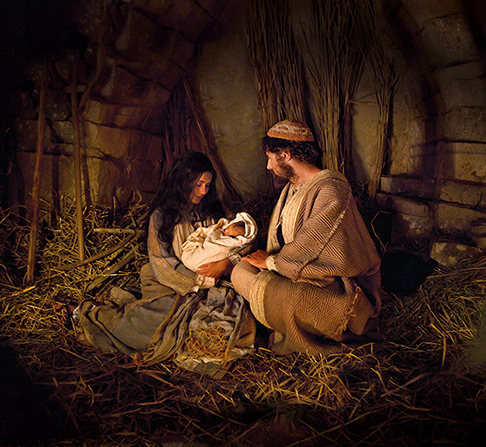
And Jacob rent his clothes, and put sackcloth upon his loins, and mourned for his son many days. All his sons and all his daughters rose up to comfort him; but he refused to be comforted; and he said, For I will go down into the grave unto my son mourning... Genesis 37:34-35
Thus saith the Lord; A voice was heard in Ramah, lamentation and bitter weeping; Rahel weeping for her children refused to be comforted for her children, because they were not. Jeremiah 31:15
He (Coriantumr) began to repent of the evil which he had done; he began to remember the words which had been spoken by the mouth of all the prophets, and he saw them that that were fulfilled thus far, every whit; and his soul mourned and refused to be comforted. (Ether 15:3)
There are even more instances of the Lord offering comfort. There is certainly much need of comfort in this world due to hatred, war, mistreatment, injustice, illness, injury, and on and on. There is not a human on the face of the Earth who has not experienced pain and sorrow. But that's the way it's supposed to be! Shocking as it is to acknowledge that, it's true. For it must needs be, that there is an opposition in all things. (2 Nephi 2:11) It's easy enough to figure out why that is. How can you understand and feel peace if you have never experienced dissension or hatred? How can you comprehend how glorious joy is if you have no idea what sadness is? How can you measure success and accomplishment if you don't know what it means to fail?
So, in this day of wars and rumors of wars, fires, men's hearts turning cold, famine, pestilence, storms, earthquakes, disease, etc., our only reactions are to either harden our hearts to suffering and become part of the problem OR look for a solution. The only solution is from a higher, more experienced and wise Heavenly Parent. Through His Spirit and the gift of His Son, we can be comforted. How? I would recommend a more complete reading of a conversation between the Lord and Enoch, but I will give some highlights:
As Enoch saw this, he had bitterness of soul, and wept over his brethren, and said unto the heavens: I will refuse to be comforted; but the Lord said unto Enoch: Lift up your heart, and be glad; and look. And it came to pass that Enoch looked; and from Noah, he beheld all the families of the earth; and he cried unto the Lord, saying: When shall the day of the Lord come? When shall the blood of the Righteous be shed, that all they that mourn may be sanctified and have eternal life? (referring to the Savior and His Atonement- this was before His mortal life) And the Lord said: It shall be in the meridian of time, in the days of wickedness and vengeance. And behold, Enoch saw the day of the coming of the Son of Man, even in the flesh; and his soul rejoiced, saying: The Righteous is lifted up, and the Lamb is slain from the foundation of the world; and through faith I am in the bosom of the Father, and behold, Zion is with me. (Moses 7:44-47)
The Lamb being slain from the foundation of the world means that the crucifixion of Jesus Christ was planned from before the world was and Enoch was privileged to see that it would, indeed, happen. He had hope for peace and the joy we will feel for eternity because of God's loving plan and our Savior's love and determination to endure through His essential offering as part of that plan. We are in the season to remember the birth that occurred long ago in the past, rather than from the view from before that Enoch had of it. We have witnesses in scripture and through the Holy Ghost that can give us comfort. But we must each CHOOSE to be comforted. We need to trust, believe, and accept that great Gift. I wish all a very Merry, peaceful, sweet Christmas.
Wednesday, December 13, 2017
Corruptible and incorruptible
Only those who are foolish would deny the wisdom of having laws. The problem that we face on Earth as mortals is that, because we lack wisdom, we are shallow in our thinking. We see only what we can see through the experiences we have had, even though we may recognize that every single person with whom we share the planet has had other experiences so their perspectives (wisdom and truth) are all different. Whenever there are laws, in order to be effective, there must be consequences to disobedience or compliance. Consequences are rarely immediate. Many criminals live years before they "get caught". I am truly sorry that our legislators are subject to lack of insight and wrongful influence so the laws they create may be skewed, incomplete, even hazardous to the common good. I am also sorry that those who volunteer or are assigned the job of enforcing the consequences for disobedience to laws are also imperfect. They can be greatly biased or even lacking experience and knowledge.
Now that the world is more and more hooked into this unseen force for good or evil that we call "the internet" we are all exposed to lies and truth with no way to discern the difference. We are all exposed to hatred that may be promoted by anything from total lies to simple ignorance. We may even participate by unknowingly passing on false information because it either aligns with our own opinion or it may just be shocking and we feel others may not be "aware". There are frequent rumors of taxing or controlling/censuring the internet. I don't know how close anyone is to that. There may well be countries where the internet is very much controlled and manipulated, either by those who think they are concerned for the "common good" or by those who lust for power. I am grateful to live in a country that continues to be relatively free. Freedom allows us to choose what to believe, who to listen to, and what to do about it. The one thing lacking is how to know who is telling the truth.
I realize there are many who might disagree with me, but I believe there is a way to know truth in things most important to us. I believe in a higher power that could control everyone and everything. He chooses not to because He wants us to be whoever we want to be. He knows ALL the truth and can and wants to share it with us, if we truly want to know- enough to pay the price. His price for truth is to trust Him. That is difficult for many reasons: we can't see Him right now with our mortal eyes or hear Him with our mortal ears (that would remove faith which is a choice in deciding what we think is right- a major purpose in being here), as well as witnessing such a mess in the world of anger, hatred, unfairness, evil, pain, sorrow, and constant suffering. How can God allow all that if He truly exists, is so powerful, and loves us?? Simple- He's not causing it- we are. He can help us through it, if we ask. He can guide us around obstacles when it is honestly in our best interest. Sometimes the pain and suffering can teach us in a way no lecture could ever do. I'm reminded of the looks on faces: when someone who has experienced great sorrow with the death or grave illness or handicap of a child talks to someone who has experienced that kind of heartache- there is true empathy or at least sympathy. When someone who has felt frustrated with their own limitations there is a very different reaction when told to someone who has always had abilities or someone to catch them when they fell from someone who has "been there".
EVERYONE on this planet is corruptible, just in varying degrees. The only incorruptible source for making and enforcing laws is Jesus Christ and our Father in Heaven. If we want truth and wisdom, that's our best source.
Now that the world is more and more hooked into this unseen force for good or evil that we call "the internet" we are all exposed to lies and truth with no way to discern the difference. We are all exposed to hatred that may be promoted by anything from total lies to simple ignorance. We may even participate by unknowingly passing on false information because it either aligns with our own opinion or it may just be shocking and we feel others may not be "aware". There are frequent rumors of taxing or controlling/censuring the internet. I don't know how close anyone is to that. There may well be countries where the internet is very much controlled and manipulated, either by those who think they are concerned for the "common good" or by those who lust for power. I am grateful to live in a country that continues to be relatively free. Freedom allows us to choose what to believe, who to listen to, and what to do about it. The one thing lacking is how to know who is telling the truth.
I realize there are many who might disagree with me, but I believe there is a way to know truth in things most important to us. I believe in a higher power that could control everyone and everything. He chooses not to because He wants us to be whoever we want to be. He knows ALL the truth and can and wants to share it with us, if we truly want to know- enough to pay the price. His price for truth is to trust Him. That is difficult for many reasons: we can't see Him right now with our mortal eyes or hear Him with our mortal ears (that would remove faith which is a choice in deciding what we think is right- a major purpose in being here), as well as witnessing such a mess in the world of anger, hatred, unfairness, evil, pain, sorrow, and constant suffering. How can God allow all that if He truly exists, is so powerful, and loves us?? Simple- He's not causing it- we are. He can help us through it, if we ask. He can guide us around obstacles when it is honestly in our best interest. Sometimes the pain and suffering can teach us in a way no lecture could ever do. I'm reminded of the looks on faces: when someone who has experienced great sorrow with the death or grave illness or handicap of a child talks to someone who has experienced that kind of heartache- there is true empathy or at least sympathy. When someone who has felt frustrated with their own limitations there is a very different reaction when told to someone who has always had abilities or someone to catch them when they fell from someone who has "been there".
EVERYONE on this planet is corruptible, just in varying degrees. The only incorruptible source for making and enforcing laws is Jesus Christ and our Father in Heaven. If we want truth and wisdom, that's our best source.
Tuesday, December 12, 2017
Finishing a discussion of covenants
( Because of my technological inabilities, I had to end the last post and start another because I didn't know how to get out of that funny colored text! )
As for temple covenants- the reasons LDS members do and should attend the temple regularly are
1- to complete ordinances for deceased ancestors who did not have the opportunity in life
2- to remind themselves of the covenants made- both their own responsibilities and God's promises
3- "This work is a prelude to the work that will consume society during the millenium. This is why it is so vital that we routinely remind ourselves how important temple work is, and how critical the temple covenants are, both to us and to those who have already gone through the veil." from LDS Living, written by Kelly Merrill
So, basically, among other things, we need to remember that we have promised:
*to take care of each other (mourn with those that mourn, share burdens, etc)
*to follow the example of our Savior in all that we do, say, and think (this will take our lifetime to achieve but we need to start wherever we are and keep working on it)
*to remain chaste, modest, and true to our spouse
*to respect others and refrain from being rude and loudly critical, especially of those in leadership positions (not that we can't disagree, but it's important to approach disagreements with anyone from a family member to a ward member to a world leader with respect and clarity)
*to be willing to sacrifice whatever the Lord would want or need of us (Take up your cross and follow me.)
None of what we covenant is shocking or brainwashing or limiting us from having our own freedom to choose. But if we CHOOSE to make a covenant with the Lord, we have to remember that every blessing we expect from Him requires a behavior on our part- it's only fair.It's just not right or logical to live however we want to then turn to our Father in Heaven, desperately in need and demanding His power and good will, when things done our own way don't work out like we planned. God has all-power and can give us everything, which is a lot. But He needs to know He can trust us with the power that He has so we can create the good He does. It's no small detail in our life.
As for temple covenants- the reasons LDS members do and should attend the temple regularly are
1- to complete ordinances for deceased ancestors who did not have the opportunity in life
2- to remind themselves of the covenants made- both their own responsibilities and God's promises
3- "This work is a prelude to the work that will consume society during the millenium. This is why it is so vital that we routinely remind ourselves how important temple work is, and how critical the temple covenants are, both to us and to those who have already gone through the veil." from LDS Living, written by Kelly Merrill
So, basically, among other things, we need to remember that we have promised:
*to take care of each other (mourn with those that mourn, share burdens, etc)
*to follow the example of our Savior in all that we do, say, and think (this will take our lifetime to achieve but we need to start wherever we are and keep working on it)
*to remain chaste, modest, and true to our spouse
*to respect others and refrain from being rude and loudly critical, especially of those in leadership positions (not that we can't disagree, but it's important to approach disagreements with anyone from a family member to a ward member to a world leader with respect and clarity)
*to be willing to sacrifice whatever the Lord would want or need of us (Take up your cross and follow me.)
None of what we covenant is shocking or brainwashing or limiting us from having our own freedom to choose. But if we CHOOSE to make a covenant with the Lord, we have to remember that every blessing we expect from Him requires a behavior on our part- it's only fair.It's just not right or logical to live however we want to then turn to our Father in Heaven, desperately in need and demanding His power and good will, when things done our own way don't work out like we planned. God has all-power and can give us everything, which is a lot. But He needs to know He can trust us with the power that He has so we can create the good He does. It's no small detail in our life.
Covenants in the templ
In the Old Testament, there is mentioned the ordinance of anointing with oil. This is available today in LDS temples. So much of our relationship with God involves "symbols" and might therefore be obscure to us as we live in these mortal bodies with limitations. The mortal Jesus taught in parables and symbols and repeated the basic admonition, "Let those who have ears, hear, and those with eyes, see" meaning that only those who have a sincere desire to understand Him because they believe Him and want to follow Him will have the tools to do so.
The first covenants we participate in when in the temple involve symbolic washing away the influence of the world to be clean and pure, then being anointed which involves lots of blessings promised by the Lord. Then we proceed to our endowment and I will use quotes to explain:
Let me give you a definition in brief. Your endowment is, to receive all those ordinances in the House of the Lord, which are necessary for you, after you have departed this life, to enable you to walk back to the presence of the Father, passing the angels who stand as sentinels, being able to give them the key words, the signs and tokens, pertaining to the holy Priesthood, and gain your eternal exaltation in spite of earth and hell. (Discourses of Brigham Young, comp. John A. Widtsoe [Salt Lake City: Deseret Book Co., 1971], page 416.)
he Temple Endowment, as administered in modern temples, comprises instruction relating to the significance and sequence of past dispensations, and the importance of the present as the greatest and grandest era in human history. This course of instruction includes a recital of the most prominent events of the creative period, the condition of our first parents in the Garden of Eden, their disobedience and consequent expulsion from that blissful abode, their condition in the lone and dreary world when doomed to live by labor and sweat, the plan of redemption by which the great transgression may be atoned, the period of the great apostasy, the restoration of the Gospel with all its ancient powers and privileges, the absolute and indispensable condition of personal purity and devotion to the right in present life, and a strict compliance with Gospel requirements. (James E. Talmage, The House of the Lord [Salt Lake City: Bookcraft, 1962], pages 99–100; hereafter cited as The House of the Lord.)
The first covenants we participate in when in the temple involve symbolic washing away the influence of the world to be clean and pure, then being anointed which involves lots of blessings promised by the Lord. Then we proceed to our endowment and I will use quotes to explain:
Let me give you a definition in brief. Your endowment is, to receive all those ordinances in the House of the Lord, which are necessary for you, after you have departed this life, to enable you to walk back to the presence of the Father, passing the angels who stand as sentinels, being able to give them the key words, the signs and tokens, pertaining to the holy Priesthood, and gain your eternal exaltation in spite of earth and hell. (Discourses of Brigham Young, comp. John A. Widtsoe [Salt Lake City: Deseret Book Co., 1971], page 416.)
he Temple Endowment, as administered in modern temples, comprises instruction relating to the significance and sequence of past dispensations, and the importance of the present as the greatest and grandest era in human history. This course of instruction includes a recital of the most prominent events of the creative period, the condition of our first parents in the Garden of Eden, their disobedience and consequent expulsion from that blissful abode, their condition in the lone and dreary world when doomed to live by labor and sweat, the plan of redemption by which the great transgression may be atoned, the period of the great apostasy, the restoration of the Gospel with all its ancient powers and privileges, the absolute and indispensable condition of personal purity and devotion to the right in present life, and a strict compliance with Gospel requirements. (James E. Talmage, The House of the Lord [Salt Lake City: Bookcraft, 1962], pages 99–100; hereafter cited as The House of the Lord.)
Sunday, December 10, 2017
Covenants in the House of the Lord
( I don't really understand why the last blog I did ended up multi-colored. I am still technologically inept. I'm sorry if it bothers anyone trying to read it.)
I want to continue some general comments going on from covenants made at baptism and confirmation and renewal at sacrament to covenants made in the Lord's House- in temples. President Hinckley was quite concerned that temples be more available for everyone who desires to make deeper covenants and feel closer to Heavenly Father. There are now over 150 operating temples all over the globe. As a prophet of God, he was determined to do all he could to prepare for the return of the Savior to rule and reign. He said, "These unique and wonderful buildings, and the ordinances administered therein, represent the ultimate in our worship. These ordinances become the most profound expressions of our theology..... Here, under the authority of the Holy Priesthood, will be administered those ordinances which lead not only to salvation, but also to eternal exaltation." Also, "The blessings of the temple for both men and women who are worthy to enter therein... include our washings and anointings that we may be clean before the Lord. They include the instruction service in which we are given an endowment of obligations and blessings that motivate us to behavior compatible with the principles of the gospel. They include the sealing ordinances by which that which is bound on earth is bound in heaven, providing for the continuity of the family."
This from an LDS Living article written by Kelly Merrill: "This work is a prelude to the work that will consume society during the millenium. This is why it is so vital that we routinely remind ourselves how important temple work is, and how critical the temple covenants are, both to us and to those who have already gone through the veil."
In church, Sunday meetings as well as other meetings, we teach each other and learn from each other through study and discussion of the words of prophets. We help each other to understand the nature of God, the meaning of the Atonement of our Savior, and principles God wants us to understand and follow in order to more quickly be worthy to stand in His presence. In the temple, the learning we do is more direct. We are given blessings, admonitions, and make covenants that all guide us to follow the Savior. As we repeat ordinances as proxy for deceased extended family, we are available to learn directly from the third member of the Godhead- the Holy Ghost. Anyone can enter a church or meetinghouse and ALL are invited to do so. Entering the Lord's house or temple requires more sincerity in making an effort to repent and to be obedient.
You must possess a current recommend to be admitted to the temple. This recommend must be signed by the bishop of your ward and the president of your stake. In the mission field, of course, the branch president and the mission president have responsibility for issuing temple recommends. Only those who are worthy should go to the temple. The bishop has the responsibility of making inquiries into our personal worthiness. This interview is of great importance to you as a member of the Church, for it is an occasion to explore with an ordained servant of the Lord the pattern of your life. If anything is amiss in your life, the bishop will be able to help you resolve it. Through this procedure, as you counsel with the common judge in Israel, you can declare or can be helped to establish your worthiness to enter the temple with the Lord’s approval. (from LDS.org manual for preparing to enter the temple)
I want to continue some general comments going on from covenants made at baptism and confirmation and renewal at sacrament to covenants made in the Lord's House- in temples. President Hinckley was quite concerned that temples be more available for everyone who desires to make deeper covenants and feel closer to Heavenly Father. There are now over 150 operating temples all over the globe. As a prophet of God, he was determined to do all he could to prepare for the return of the Savior to rule and reign. He said, "These unique and wonderful buildings, and the ordinances administered therein, represent the ultimate in our worship. These ordinances become the most profound expressions of our theology..... Here, under the authority of the Holy Priesthood, will be administered those ordinances which lead not only to salvation, but also to eternal exaltation." Also, "The blessings of the temple for both men and women who are worthy to enter therein... include our washings and anointings that we may be clean before the Lord. They include the instruction service in which we are given an endowment of obligations and blessings that motivate us to behavior compatible with the principles of the gospel. They include the sealing ordinances by which that which is bound on earth is bound in heaven, providing for the continuity of the family."
This from an LDS Living article written by Kelly Merrill: "This work is a prelude to the work that will consume society during the millenium. This is why it is so vital that we routinely remind ourselves how important temple work is, and how critical the temple covenants are, both to us and to those who have already gone through the veil."
In church, Sunday meetings as well as other meetings, we teach each other and learn from each other through study and discussion of the words of prophets. We help each other to understand the nature of God, the meaning of the Atonement of our Savior, and principles God wants us to understand and follow in order to more quickly be worthy to stand in His presence. In the temple, the learning we do is more direct. We are given blessings, admonitions, and make covenants that all guide us to follow the Savior. As we repeat ordinances as proxy for deceased extended family, we are available to learn directly from the third member of the Godhead- the Holy Ghost. Anyone can enter a church or meetinghouse and ALL are invited to do so. Entering the Lord's house or temple requires more sincerity in making an effort to repent and to be obedient.
You must possess a current recommend to be admitted to the temple. This recommend must be signed by the bishop of your ward and the president of your stake. In the mission field, of course, the branch president and the mission president have responsibility for issuing temple recommends. Only those who are worthy should go to the temple. The bishop has the responsibility of making inquiries into our personal worthiness. This interview is of great importance to you as a member of the Church, for it is an occasion to explore with an ordained servant of the Lord the pattern of your life. If anything is amiss in your life, the bishop will be able to help you resolve it. Through this procedure, as you counsel with the common judge in Israel, you can declare or can be helped to establish your worthiness to enter the temple with the Lord’s approval. (from LDS.org manual for preparing to enter the temple)
Saturday, December 09, 2017
Covenants: Preparing to enter the house of the Lord
Whenever the Lord has had a people on the earth who will obey His word, they have been commanded to build temples in which the ordinances of the gospel and other spiritual manifestations that pertain to exaltation and eternal life may be administered. In cases of extreme poverty or emergency, these ordinances may sometimes be done on a mountaintop (see D&C 124:37–55). This may be the case with Mount Sinai and the Mount of Transfiguration. The tabernacle erected by Moses was a type of portable temple, since the Israelites were traveling in the wilderness. (LDS Bible Dictionary)
And thou shalt bring Aaron and his sons unto the door of the tabernacle of congregation and wash them with water, And thou shalt put upon Aaron the holy garments, and anoint him and sanctify him... (Exodus 40:12-13)
Since the temple built by Solomon in all its grandeur and glory, there were no Houses of the Lord until the Lord commanded Joseph Smith, in the 1800's, to build a house for Him. The Lord expects anyone entering His presence to be cleansed. No unclean thing can dwell with God. (1 Ne 10:21) Once we have chosen to covenant, as evidenced by being baptized, with God, it is not a "done deal" that no more is expected of us until we die and are resurrected. We have an opportunity to continue to learn and progress and even enter the Lord's presence.
Temples are literally houses of the Lord. They are holy places of worship where individuals make sacred covenants with God. Because making covenants with God is such a solemn responsibility, individuals cannot enter the temple to receive their endowments or be sealed in marriage for eternity until they have fully prepared themselves and been members of the Church for at least a year. (LDS.Org, topic "Temples")
All of God's children will continue to progress through eternity and we will retain everything we gain in the way of learning truth and God's principles during our mortal life. Making covenants is a way of showing God our sincere desire to obey His and strive to be like Him and His Son. I am so grateful that my Heavenly Father believes in me enough to trust me with the light He wants to share with all of His children as soon as they are willing. I am far from being like my Savior but I believe that His admonitions to follow Him mean that I can.
And thou shalt bring Aaron and his sons unto the door of the tabernacle of congregation and wash them with water, And thou shalt put upon Aaron the holy garments, and anoint him and sanctify him... (Exodus 40:12-13)
Since the temple built by Solomon in all its grandeur and glory, there were no Houses of the Lord until the Lord commanded Joseph Smith, in the 1800's, to build a house for Him. The Lord expects anyone entering His presence to be cleansed. No unclean thing can dwell with God. (1 Ne 10:21) Once we have chosen to covenant, as evidenced by being baptized, with God, it is not a "done deal" that no more is expected of us until we die and are resurrected. We have an opportunity to continue to learn and progress and even enter the Lord's presence.
Temples are literally houses of the Lord. They are holy places of worship where individuals make sacred covenants with God. Because making covenants with God is such a solemn responsibility, individuals cannot enter the temple to receive their endowments or be sealed in marriage for eternity until they have fully prepared themselves and been members of the Church for at least a year. (LDS.Org, topic "Temples")
All of God's children will continue to progress through eternity and we will retain everything we gain in the way of learning truth and God's principles during our mortal life. Making covenants is a way of showing God our sincere desire to obey His and strive to be like Him and His Son. I am so grateful that my Heavenly Father believes in me enough to trust me with the light He wants to share with all of His children as soon as they are willing. I am far from being like my Savior but I believe that His admonitions to follow Him mean that I can.
Thursday, December 07, 2017
Covenants: weekly renewal
Near the end of our Savior's mortal ministry, he instituted the ordinance we call "the sacrament" which is partaking of wine/water and bread "in remembrance" of Him. Today it is done in a variety of ways by various religious groups. The main purpose continues to be to remember: remember Jesus Christ, what He did for every single one of the people on this planet and to remember our own covenants that we made when baptized. There are countless scriptures referring to it. I am going to give a couple of quotes from people today which are not available in our canonized scriptures.
What does the name of Christ and that covenant mean? The most frequent single meaning of the scriptures that refer to the name of the Lord seem to mean the work of the Lord- His work, His atonement, His mission..... Everyone who covenants that they are willing to take upon them the name of Christ is saying 'I will handle my share of that great mission, and my share is what I am called to do.' (Dallin H. Oaks, currently serving as one of the Twelve Apostles)
"In many denominations, it would be thought odd that the sacrament of the Lord's supper is offered every week. Yet the Latter Day Saints know that imperfect beings must regularly reaffirm their personal goal of perfection, being justified in the meaning by the atonement of Christ. Accordingly, each week we come before the Lord as we prepare for the sacrament and say essentially, 'Heavenly Father, I wasn't perfect again this week, but I repent of my sins and reaffirm my commitment to keep all the commandments. I promise to go back and try again with all my heart, might, mind, and strength. I still want and need the cleansing that comes through faith, repentance, and baptism. Please extend my contract, my covenant of baptism, and grant me the continued blessings of the Atonement and the companionship of the Holy Ghost.' " (Stephen E. Robinson)
I wish it weren't as easy as it is to forget something so important as a covenant with God.... but it is. Despite our best efforts, we get caught up in the world we can see, touch, hear, and feel with our mortal senses. I am grateful for a weekly reminder of who I am, what I have promised, where I am going from here, and who is at the other end.
What does the name of Christ and that covenant mean? The most frequent single meaning of the scriptures that refer to the name of the Lord seem to mean the work of the Lord- His work, His atonement, His mission..... Everyone who covenants that they are willing to take upon them the name of Christ is saying 'I will handle my share of that great mission, and my share is what I am called to do.' (Dallin H. Oaks, currently serving as one of the Twelve Apostles)
"In many denominations, it would be thought odd that the sacrament of the Lord's supper is offered every week. Yet the Latter Day Saints know that imperfect beings must regularly reaffirm their personal goal of perfection, being justified in the meaning by the atonement of Christ. Accordingly, each week we come before the Lord as we prepare for the sacrament and say essentially, 'Heavenly Father, I wasn't perfect again this week, but I repent of my sins and reaffirm my commitment to keep all the commandments. I promise to go back and try again with all my heart, might, mind, and strength. I still want and need the cleansing that comes through faith, repentance, and baptism. Please extend my contract, my covenant of baptism, and grant me the continued blessings of the Atonement and the companionship of the Holy Ghost.' " (Stephen E. Robinson)
I wish it weren't as easy as it is to forget something so important as a covenant with God.... but it is. Despite our best efforts, we get caught up in the world we can see, touch, hear, and feel with our mortal senses. I am grateful for a weekly reminder of who I am, what I have promised, where I am going from here, and who is at the other end.
Tuesday, December 05, 2017
Covenants: Baptism by water and fire
Making a covenant, or serious agreement or contract, involves input and expectations from all parties. If we consider only what we want from God without being willing to listen to His expectations for us, it isn't really a covenant; it's only a demand that we make to receive something we want from Him. Is it really fair to expect such one-sidedness? So, we pursue baptism because that is one of God's stipulations: And the Father said: Repent ye, repent ye, and be baptized in the name of my Beloved Son. (2 Ne 31:11) In the LDS Bible Dictionary is this clarification: Baptism is not optional if one wishes the fullness of salvation. Jesus said a person must be born of water and of the Spirit (John 3:3-5). When he sent the twelve apostles forth to teach the gospel he told them that whosoever believed and was baptized would be saved; and whosoever did not believe would be damned. (Mark 16:16)..... Baptism symbolizes death, burial, and resurrection, and can only be done by immersion. Many Christians have been troubled by the lack of opportunity millions of people have suffered when not being given the option of being baptized then dying without it. There have been various attempts to explain how God can love ALL of His children and be fair and just, but condemn the unbaptized. Paul (in the New Testament) in his first letter to the Corinthians refers to how this is resolved: Else what shall they do which are baptized for the dead, if the dead rise not at all? why are they then baptized for the dead? (1 Cor. 15:29) Baptisms and confirmations (gift of the Holy Ghost) for those who fit this category are done in LDS temples all over the world. Those in the spirit world are not required to accept proxy ordinances but, if they desire it, the ordinance is performed when they can no longer do it because they no longer have a physical body and won't have until after resurrection. It's likely, due to the vast number of earth-inhabiting children of God, there will be some who need to be baptized after they have received their resurrected body. (That will occur during the Millenium.) In temples today, we are only trying to assist in this work by searching out our own kindred dead and performing ordinances that allow them to make covenants required by God.
Matthew recorded John the Baptist: I indeed baptize you with water unto repentance: but he that cometh after me is mightier than I, whose shoes I am not worthy to bear: he shall baptize you with the Holy Ghost, and with fire (Matt. 3:11) In the Book of Mormon, 2 Nephi 31:12 is recorded: And also, the voice of the Son came unto me, saying: He that is baptized in my name, to him will the Father give the Holy Ghost, like unto me; wherefore, follow me and do the things which ye have seen me do. Again I refer to the Bible Dictionary for the clearest explanation of the identity of the Holy Ghost: The third member of the Godhead and, as the name implies, a personage of Spirit, not possessing a body of flesh and bones. The Holy Ghost has been manifest in every dispensation of the gospel since the beginning, being first made known to Adam. The Holy Ghost is manifested to men on the earth both as the power of the Holy Ghost and as the gift of the Holy Ghost. The power can come upon one before baptism, and is the convincing witness that the gospel is true.... The gift can come only after proper and authorized baptism, and is conferred by the laying on of hands. It came upon a large group of early followers of Christ on what is known as the "Day of Pentecost". Even after having been given it as a gift by one having authority to do so, the receiver must remain worthy of Its presence. The Lord (or His representative) dwelleth not in unholy temples. (Mosiah 2:37) If we are given a gift and choose not to use it or treat it with respect, there is no purpose in our having that gift. That works just like any contract, when one party breaks the agreement, the contract is null and void.
Matthew recorded John the Baptist: I indeed baptize you with water unto repentance: but he that cometh after me is mightier than I, whose shoes I am not worthy to bear: he shall baptize you with the Holy Ghost, and with fire (Matt. 3:11) In the Book of Mormon, 2 Nephi 31:12 is recorded: And also, the voice of the Son came unto me, saying: He that is baptized in my name, to him will the Father give the Holy Ghost, like unto me; wherefore, follow me and do the things which ye have seen me do. Again I refer to the Bible Dictionary for the clearest explanation of the identity of the Holy Ghost: The third member of the Godhead and, as the name implies, a personage of Spirit, not possessing a body of flesh and bones. The Holy Ghost has been manifest in every dispensation of the gospel since the beginning, being first made known to Adam. The Holy Ghost is manifested to men on the earth both as the power of the Holy Ghost and as the gift of the Holy Ghost. The power can come upon one before baptism, and is the convincing witness that the gospel is true.... The gift can come only after proper and authorized baptism, and is conferred by the laying on of hands. It came upon a large group of early followers of Christ on what is known as the "Day of Pentecost". Even after having been given it as a gift by one having authority to do so, the receiver must remain worthy of Its presence. The Lord (or His representative) dwelleth not in unholy temples. (Mosiah 2:37) If we are given a gift and choose not to use it or treat it with respect, there is no purpose in our having that gift. That works just like any contract, when one party breaks the agreement, the contract is null and void.
Monday, December 04, 2017
Covenants: faith and repentance
"Covenants with God are serious and solemn...A covenant becomes a pledge of self... When a man makes a covenant, he is holding himself, like water, in his cupped hands. And if he opens his fingers he need not hope to find himself again. A covenant-breaker no longer has a self to commit or a guarantee to offer." (Dale Renlund Sept. 2017 Ensign, conference issue)
The 4th Article of Faith of the LDS Church states, "The first principles and ordinances of the gospel are, first, faith in the Lord Jesus Christ, second repentance, third baptism by immersion for the remission of sins, fourth laying on of hands for the gift of the Holy Ghost."
As I consider the covenants we make with God, I will start with the very first step, which is faith. Faith is a belief in something you cannot necessarily see or touch or sense with your physical faculties. It is a belief, strong enough, to cause a change in you- not just a temporary awe due to witnessing a "miracle", not just a temporary desperation caused by a need to call upon a higher power when you are in a difficult situation and have no one else to turn to, and not just a declaration that you believe God and Jesus Christ exist. Faith is a decision to take a specific path in your goals, actions, and desires. Faith, like any decision we may make, can waver at times. We can have doubts and fears that cause us to think maybe God isn't really there or He doesn't really care about us. Faith at its best gives us what Jesus calls, "a peace which passeth all understanding"- basically meaning that we don't feel anxiety because we deeply believe God is aware of us and cares and will work things out whatever way He determines is best- even know in the same way you know the sun will rise in the morning because you have witnessed it before or in the same way you know that someone loves you even when they may be angry at you or disappointed in you for the moment. We can choose to scoff at the idea that , just because the sun was there yesterday, doesn't mean it will be back in the sky again. Or we can decide we don't believe in the love of another or that they have lost whatever love they had in the past. So, FAITH is a decision to believe, wholeheartedly with no intention of turning back. Some words from the LDS Bible Dictionary on faith: faith is a principle of action and of power..... by faith one obtains a remission of sins and eventually can stand in the presence of God. All true faith must be based upon correct knowledge or it cannot produce the desired results..... Although faith is a gift, it must be cultured and sought after until it grows..." I could go on endlessly quoting scriptures and wise words about the essence of faith, but it's basically a choice to strongly believe.
The second principle as we pursue covenants with God is repentance. Repentance is NOT just feeling sorry. Worldly sorrow is when you get caught or punished and you don't really feel bad for what you did or thought, you just wish things were different. Godly sorrow is when you fully recognize your own faults and weaknesses,recognize your own responsibility to do something about it and have a deep desire to CHANGE so you won't be likely to continue making the same errors (sins). Repentance can be seen as difficult because it's really a big step to honestly assess yourself and be willing to admit flaws. It's also difficult to decide to be different than you are currently. But true repentance is actually healing; it's re-forming yourself into an improved version. It's the ultimate success to become better. God, as any loving parent, wants to see us grow up and be better. He is more than willing to help us if we sincerely desire to improve. He can't just do it for us any more than a good parent can take a math test for their child so they get a good grade. He can encourage us- through words of prophets and the tender voice of the Holy Ghost. He can help us- through promptings and sometimes putting a person or article or remembrance in our path. He can comfort us when the trying wearies us. He gave His Only Begotten Son to be ridiculed, hated, scorned, spit on, tortured, and crucified so that we can be eligible to meet the demands of eternal justice and healed from our pains and sorrows. Growing, learning, and improving is mostly uncomfortable when we don't sincerely want to do it, but are only doing it to compete with others or impress others or feel it a duty.
To be who we truly want to be is to decide for ourselves that we want to pursue an ideal. If God or Jesus Christ stood in front of you and told you exactly what to do and say and think every second, would that be YOU?? They want us to be like Them- "perfect"- but only by our choice and growth.
The 4th Article of Faith of the LDS Church states, "The first principles and ordinances of the gospel are, first, faith in the Lord Jesus Christ, second repentance, third baptism by immersion for the remission of sins, fourth laying on of hands for the gift of the Holy Ghost."
As I consider the covenants we make with God, I will start with the very first step, which is faith. Faith is a belief in something you cannot necessarily see or touch or sense with your physical faculties. It is a belief, strong enough, to cause a change in you- not just a temporary awe due to witnessing a "miracle", not just a temporary desperation caused by a need to call upon a higher power when you are in a difficult situation and have no one else to turn to, and not just a declaration that you believe God and Jesus Christ exist. Faith is a decision to take a specific path in your goals, actions, and desires. Faith, like any decision we may make, can waver at times. We can have doubts and fears that cause us to think maybe God isn't really there or He doesn't really care about us. Faith at its best gives us what Jesus calls, "a peace which passeth all understanding"- basically meaning that we don't feel anxiety because we deeply believe God is aware of us and cares and will work things out whatever way He determines is best- even know in the same way you know the sun will rise in the morning because you have witnessed it before or in the same way you know that someone loves you even when they may be angry at you or disappointed in you for the moment. We can choose to scoff at the idea that , just because the sun was there yesterday, doesn't mean it will be back in the sky again. Or we can decide we don't believe in the love of another or that they have lost whatever love they had in the past. So, FAITH is a decision to believe, wholeheartedly with no intention of turning back. Some words from the LDS Bible Dictionary on faith: faith is a principle of action and of power..... by faith one obtains a remission of sins and eventually can stand in the presence of God. All true faith must be based upon correct knowledge or it cannot produce the desired results..... Although faith is a gift, it must be cultured and sought after until it grows..." I could go on endlessly quoting scriptures and wise words about the essence of faith, but it's basically a choice to strongly believe.
The second principle as we pursue covenants with God is repentance. Repentance is NOT just feeling sorry. Worldly sorrow is when you get caught or punished and you don't really feel bad for what you did or thought, you just wish things were different. Godly sorrow is when you fully recognize your own faults and weaknesses,recognize your own responsibility to do something about it and have a deep desire to CHANGE so you won't be likely to continue making the same errors (sins). Repentance can be seen as difficult because it's really a big step to honestly assess yourself and be willing to admit flaws. It's also difficult to decide to be different than you are currently. But true repentance is actually healing; it's re-forming yourself into an improved version. It's the ultimate success to become better. God, as any loving parent, wants to see us grow up and be better. He is more than willing to help us if we sincerely desire to improve. He can't just do it for us any more than a good parent can take a math test for their child so they get a good grade. He can encourage us- through words of prophets and the tender voice of the Holy Ghost. He can help us- through promptings and sometimes putting a person or article or remembrance in our path. He can comfort us when the trying wearies us. He gave His Only Begotten Son to be ridiculed, hated, scorned, spit on, tortured, and crucified so that we can be eligible to meet the demands of eternal justice and healed from our pains and sorrows. Growing, learning, and improving is mostly uncomfortable when we don't sincerely want to do it, but are only doing it to compete with others or impress others or feel it a duty.
To be who we truly want to be is to decide for ourselves that we want to pursue an ideal. If God or Jesus Christ stood in front of you and told you exactly what to do and say and think every second, would that be YOU?? They want us to be like Them- "perfect"- but only by our choice and growth.
Thursday, November 30, 2017
Why covenants?
Several times in my life I have wanted to lose weight. I was usually reluctant to tell anyone that I was trying because I figured then I would be more accountable and would just cause disappointment in them and myself when they asked how it was going and I hadn't succeeded.
More and more often, couples are delaying marriage and choosing to simply live together. They figure they feel a commitment to each other and that's enough. On the other hand, if either or both decide it's just not working out, it's a lot easier to separate.
Sometimes business deals are just made orally and maybe closed with a handshake. Depending on the features of the deal, that can be a fairly tenuous agreement. If there is no formal record of the deal, it's easy to back out or just "forget". Even between close friends or family members, some form of formal document makes everyone feel more secure and holds all parties more accountable.
Many people consider themselves "religious" but choose not to align themselves with any particular formal church. They simply believe a higher power of some sort exists even if they don't really understand what that power is. Many Christians go a step further and acknowledge the reality of Jesus Christ as the Only Begotten Son of God who lived as a mortal a couple thousand years ago, was crucified, died on the cross, and was resurrected. They believe He atoned for their sins which allows them to be "saved" and eligible to live with God after death. They also believe that simply saying they believe in God and Christ and admitting Jesus is their Savior is sufficient. God doesn't seem to feel quite that informal about His relationship with us. A summary from the LDS Bible Dictionary states:
Between God and man...It is important to notice that the two parties to the agreement do not stand in the relation of independent and equal contractors. God in his good pleasure fixes the terms, which man accepts. The same word is sometimes rendered "testament". The gospel is so arranged that principles and ordinances are received by covenant placing the recipient under strong obligation and responsibility to honor the commitment. Thus the severe consequences to Ananias and Sapphira, who deliberately broke their covenant and lied unto God. (Acts 5:1-11)
I have been thinking about the purpose, variety, and significance of covenants made between man and God. I plan to explore each covenant we have the opportunity to make and what they mean to us as we live out our mortal lives.
More and more often, couples are delaying marriage and choosing to simply live together. They figure they feel a commitment to each other and that's enough. On the other hand, if either or both decide it's just not working out, it's a lot easier to separate.
Sometimes business deals are just made orally and maybe closed with a handshake. Depending on the features of the deal, that can be a fairly tenuous agreement. If there is no formal record of the deal, it's easy to back out or just "forget". Even between close friends or family members, some form of formal document makes everyone feel more secure and holds all parties more accountable.
Many people consider themselves "religious" but choose not to align themselves with any particular formal church. They simply believe a higher power of some sort exists even if they don't really understand what that power is. Many Christians go a step further and acknowledge the reality of Jesus Christ as the Only Begotten Son of God who lived as a mortal a couple thousand years ago, was crucified, died on the cross, and was resurrected. They believe He atoned for their sins which allows them to be "saved" and eligible to live with God after death. They also believe that simply saying they believe in God and Christ and admitting Jesus is their Savior is sufficient. God doesn't seem to feel quite that informal about His relationship with us. A summary from the LDS Bible Dictionary states:
Between God and man...It is important to notice that the two parties to the agreement do not stand in the relation of independent and equal contractors. God in his good pleasure fixes the terms, which man accepts. The same word is sometimes rendered "testament". The gospel is so arranged that principles and ordinances are received by covenant placing the recipient under strong obligation and responsibility to honor the commitment. Thus the severe consequences to Ananias and Sapphira, who deliberately broke their covenant and lied unto God. (Acts 5:1-11)
I have been thinking about the purpose, variety, and significance of covenants made between man and God. I plan to explore each covenant we have the opportunity to make and what they mean to us as we live out our mortal lives.
Sunday, November 26, 2017
Pride is destructive, so is envy
I know that pride can cause harm in so many ways. A person who is proud is easily offended which disrupts relationships with others. A proud person also tends to undervalue and be ungrateful for others because they are focused on comparing or competing. Somebody has to lose. If the proud person perceives themselves as the victor, they look down on their "competitor". If the proud person perceives themselves as the loser, they feel bad about themselves or they resent their "opponent" and renew their determination to beat them. Either way, both people lose.
Envy is also destructive. I really dislike hearing comments like, "Oh, I hate her because she's so thin/pretty/talented." Or "He's not so great. I have seen/heard better." Those comments are really borne of envy and resentment. Rather than appreciating someone's ability/hard work/ talent, there is a primal response to wish them harm or failure. For the person doing the envying, this is like poison to their soul and only makes them bitter. It causes them to look at the other with hateful vision which ends up making both feel bad. For the person being envied, no matter how hard that person may have worked to achieve the level they have achieved, they feel like they have done something wrong. Rather than having others join in their celebration for the accomplishment, they feel like they have failed. When anyone strives to do well, they are hoping for validation of their worth. That can be detrimental if it goes to the point of being prideful. But if someone tries to keep a neat yard or home, struggles to be worthy of a promotion or award, or fights laziness/obesity/shyness or whatever, their achievement deserves respect or appreciation, not derision. We can either help each other, or destroy each other.
Envy is also destructive. I really dislike hearing comments like, "Oh, I hate her because she's so thin/pretty/talented." Or "He's not so great. I have seen/heard better." Those comments are really borne of envy and resentment. Rather than appreciating someone's ability/hard work/ talent, there is a primal response to wish them harm or failure. For the person doing the envying, this is like poison to their soul and only makes them bitter. It causes them to look at the other with hateful vision which ends up making both feel bad. For the person being envied, no matter how hard that person may have worked to achieve the level they have achieved, they feel like they have done something wrong. Rather than having others join in their celebration for the accomplishment, they feel like they have failed. When anyone strives to do well, they are hoping for validation of their worth. That can be detrimental if it goes to the point of being prideful. But if someone tries to keep a neat yard or home, struggles to be worthy of a promotion or award, or fights laziness/obesity/shyness or whatever, their achievement deserves respect or appreciation, not derision. We can either help each other, or destroy each other.
Friday, November 17, 2017
Reward???
I went for a walk with Russ this morning, which is our usual routine. I didn't necessarily FEEL like going for a walk. I just know it's good for me. I don't derive any immediate reward for doing it. I only know what is likely to happen if I go for very long without making the effort.
It caused me to ponder what motivates us to do things. We all like rewards. We have a special area in our brains the primary function of which is to send "feel good" messages throughout our body when we are happy. That's how we become so easily addicted- to sex, food, drugs, alcohol, even endorphins brought about by vigorous exercise. It's obviously not necessarily a benefit that we have this reaction. It can lead us into REALLY BIG trouble.
So, what about things that DON'T provide an immediate reward? How do we carry on when results are much more long-term, even eternal. We change our baby's diaper over and over again because it will stink, cause diaper rash, etc. We get up and go to work because we know we have to pay the mortgage or rent, buy food, make car payments, etc. We make food or do laundry for our children because they will complain or make a mess doing it themselves, or some other more immediate reason. But, what about being honest, or helpful, or kind? I guess you could say there can be a reward of having people like us. It's better than being disliked.
God has said, through a prophet, that there must needs be opposition in all things. We know there is good and evil, truth and falsehood, pleasant and miserable, etc. If we were to choose what God would have us choose every time then receive an immediate reward, we would be doing good for an immediate reward, NOT because we were sincerely choosing good. That's why it's only meaningful if and when we endure to the end. We keep on doing good because we sincerely believe, deep in our hearts, that helping people, being kind, telling the truth, working hard, etc. is truly what we want to do. We believe in doing good. We believe in what God believes in. And it's not just because we expect a reward.
It caused me to ponder what motivates us to do things. We all like rewards. We have a special area in our brains the primary function of which is to send "feel good" messages throughout our body when we are happy. That's how we become so easily addicted- to sex, food, drugs, alcohol, even endorphins brought about by vigorous exercise. It's obviously not necessarily a benefit that we have this reaction. It can lead us into REALLY BIG trouble.
So, what about things that DON'T provide an immediate reward? How do we carry on when results are much more long-term, even eternal. We change our baby's diaper over and over again because it will stink, cause diaper rash, etc. We get up and go to work because we know we have to pay the mortgage or rent, buy food, make car payments, etc. We make food or do laundry for our children because they will complain or make a mess doing it themselves, or some other more immediate reason. But, what about being honest, or helpful, or kind? I guess you could say there can be a reward of having people like us. It's better than being disliked.
God has said, through a prophet, that there must needs be opposition in all things. We know there is good and evil, truth and falsehood, pleasant and miserable, etc. If we were to choose what God would have us choose every time then receive an immediate reward, we would be doing good for an immediate reward, NOT because we were sincerely choosing good. That's why it's only meaningful if and when we endure to the end. We keep on doing good because we sincerely believe, deep in our hearts, that helping people, being kind, telling the truth, working hard, etc. is truly what we want to do. We believe in doing good. We believe in what God believes in. And it's not just because we expect a reward.
Saturday, November 11, 2017
Melting pot
The United States has been referred to for many years as a melting pot. Some seek to criticize this country on the grounds that it lacks sufficient "cultural diversity". I'm sure there are places in the world where, within one nation's boundaries, more languages are spoken or more varied folk songs are sung or more ethnicities are evident. Since settlers arrived on ships in the 1600's, this particular landmass has increased in population, fed by a wide variety of ethnic, religious, and racial group sources. Through the disagreements between the "newcomers" and the Native American, through the unwilling immigrants brought to be slaves, through the slurs and prejudice aimed at Irish, Italians, Chinese, Japanese, etc.- there has been a considerable amount of bumping and jostling as American citizens strive to live together peacefully despite constant differences. You can still find more homogeneous pockets, like in Chinatowns on the west coast and in NYC, or the Amish in PA or OH , or Hispanics in TX or AZ. But, for the most part, this really is a "melting pot". The point of being a melting pot is NOT for each ingredient to remain separately recognizable. When you make a soup, you can still discern the onions from the beans from the meat, from the tomatoes, from the..... I think you get the idea. But each ingredient takes on some flavor from the others so the resulting blend is pleasant. I think it's a really GOOD thing to avoid having a "little Italy" or a "little China" or a "little Syria" or whatever. I believe this country was founded to be a place for anyone and everyone to have an opportunity to join with others in the pursuit of life, liberty and happiness. The point is NOT to have a dictatorship so we are forced to live the standards of one powerful individual. The point is NOT to have a monarchy to all be subject to someone who just happened to be born of a certain set of parents. The point is NOT to live the rules of one specific religion. The point is to be willing to make enough compromises, be tolerant enough, and pleasant enough to get along peacefully. This will not result from adherence to the standards of any individual group or belief system. It is not socialism where everyone is forced to give up what they earn to share with everyone else, although taxes are required to be collected in order to provide for the common defense and larger welfare. It is not oppression where people are imprisoned because they publicly share their opinion, although there is a legal system to protect individuals from being harmed by others. It is elements of everyone and everything but not absolutely one of anything.
The Lord's Kingdom is similar. Jesus was criticized during His mortal life because he associated with publicans and sinners. He didn't say anything about just accepting what anyone did. He said, "The well have no need of a physician." His influence was needed more among some than others. We are not to judge or hate those who may not be what we would label ideal. We are to love them and, in the process, come to see the good in them which changes us, and for them to see the good in us, which changes them. We don't form a peaceful society by clinging to diversity. We bring with us our ideas, talents, skills, and knowledge then SHARE it with others who all have the right to refuse our offering just as we may not choose what they have. I have my favorite genres of music but I respect others' preferences for whatever type of music they like. I may not want to go to a performance of their preference, but I wouldn't stop them from going. I think most people recognize that truth is generally "somewhere in the middle". The trick is to figure out what is the middle.
The Lord's Kingdom is similar. Jesus was criticized during His mortal life because he associated with publicans and sinners. He didn't say anything about just accepting what anyone did. He said, "The well have no need of a physician." His influence was needed more among some than others. We are not to judge or hate those who may not be what we would label ideal. We are to love them and, in the process, come to see the good in them which changes us, and for them to see the good in us, which changes them. We don't form a peaceful society by clinging to diversity. We bring with us our ideas, talents, skills, and knowledge then SHARE it with others who all have the right to refuse our offering just as we may not choose what they have. I have my favorite genres of music but I respect others' preferences for whatever type of music they like. I may not want to go to a performance of their preference, but I wouldn't stop them from going. I think most people recognize that truth is generally "somewhere in the middle". The trick is to figure out what is the middle.
Saturday, November 04, 2017
Glimpsing eternity
There is some concern about "running out"- of space, time, fuel, food, etc. It borders on panic for some and has certainly become a hot political issue in many cases. So far, in the United States no limit has been set for the bearing of children. There is considerable effort to become more energy efficient in our vehicles and homes. Yet, when you consider where everything came from, there is no rational reason to fear "running out".
Recently Russ and I have been watching a series of lectures on meteorology. Predicting the weather is a much more complex effort than I ever realized! But, put simply, I can remember the basic diagram learned long ago in science where water falls from the clouds in the sky, soaks in the ground and gets used by plants and animals, then eventually evaporates back into the sky to form clouds again. There is no actual disappearance or creation of hydrogen or oxygen atoms. In a similar fashion, everything on and in this planet has come from this planet. Unless there has been some kind of interplanetary importation going on that I am unaware of, everything here is made of atoms/materials that have always been here. Atoms can be re-organized into different substances- for instance, plastics are made from naturally made petroleum products but are then in a form that take a very long time to break down again to be easily formed by nature into something else. Man has become quite clever in re-making things but hasn't yet figured out what to do with things he has created through his re-organizing of atoms. Hence, the ecological disasters by our primitive nuclear energy use or destruction of natural eco-systems. Man is not the only inhabitant of the planet but we are the most advanced. Plants and animals existed and went extinct before we arrived. We are not the only cause for destruction or construction. However, we are still greatly lacking in knowledge and wisdom to know how to clean up our own messes. We are simply children figuring out how to build with the blocks we have been given- but those blocks are eternal. We can gain a little glimpse of wisdom and eternity if we can wrap our heads around the fact that everything that is here has always been here, including our bodies- our clay tabernacles. Nearly 200 years ago, Joseph Smith, during a sermon at a funeral, had this to say:
You ask the learned doctors why they say the world was made out of nothing, and they will answer;'Doesn't the Bible say He created the world?' And they infer from the work create, that it must have been made out of nothing. Now, the word create came from the word barau, which does not mean create out of nothing; it means to organize; the same as a man would organize materials and build a ship. Hence we infer that God had materials to organize the world out of chaos- chaotic matter; which is element, and in which dwells all glory. Element had an existence from the time He had. The pure principles of element are principles which can never be destroyed, they may be organized and re-organized, but not destroyed. They had no beginning and can have no end.
We have everything we need to make trees, humpback whales, and mountains. We just don't know how. We needn't be too impatient, though. We are slowly learning in the aggregate. We just need to be observant, open to learning, and avoid being self-centered in our thoughts and actions. We are children of God and He wants to share with us everything He has--- and that's everything.
Recently Russ and I have been watching a series of lectures on meteorology. Predicting the weather is a much more complex effort than I ever realized! But, put simply, I can remember the basic diagram learned long ago in science where water falls from the clouds in the sky, soaks in the ground and gets used by plants and animals, then eventually evaporates back into the sky to form clouds again. There is no actual disappearance or creation of hydrogen or oxygen atoms. In a similar fashion, everything on and in this planet has come from this planet. Unless there has been some kind of interplanetary importation going on that I am unaware of, everything here is made of atoms/materials that have always been here. Atoms can be re-organized into different substances- for instance, plastics are made from naturally made petroleum products but are then in a form that take a very long time to break down again to be easily formed by nature into something else. Man has become quite clever in re-making things but hasn't yet figured out what to do with things he has created through his re-organizing of atoms. Hence, the ecological disasters by our primitive nuclear energy use or destruction of natural eco-systems. Man is not the only inhabitant of the planet but we are the most advanced. Plants and animals existed and went extinct before we arrived. We are not the only cause for destruction or construction. However, we are still greatly lacking in knowledge and wisdom to know how to clean up our own messes. We are simply children figuring out how to build with the blocks we have been given- but those blocks are eternal. We can gain a little glimpse of wisdom and eternity if we can wrap our heads around the fact that everything that is here has always been here, including our bodies- our clay tabernacles. Nearly 200 years ago, Joseph Smith, during a sermon at a funeral, had this to say:
You ask the learned doctors why they say the world was made out of nothing, and they will answer;'Doesn't the Bible say He created the world?' And they infer from the work create, that it must have been made out of nothing. Now, the word create came from the word barau, which does not mean create out of nothing; it means to organize; the same as a man would organize materials and build a ship. Hence we infer that God had materials to organize the world out of chaos- chaotic matter; which is element, and in which dwells all glory. Element had an existence from the time He had. The pure principles of element are principles which can never be destroyed, they may be organized and re-organized, but not destroyed. They had no beginning and can have no end.
We have everything we need to make trees, humpback whales, and mountains. We just don't know how. We needn't be too impatient, though. We are slowly learning in the aggregate. We just need to be observant, open to learning, and avoid being self-centered in our thoughts and actions. We are children of God and He wants to share with us everything He has--- and that's everything.
Wednesday, November 01, 2017
Meditations on a crocheted cloth
Man was also in the beginning with God. Intelligence, or the light of truth, was not created or made, neither indeed can be. (Doctrine and Covenants 93:29) For I, the Lord God, created all things, of which I have spoken, spiritually, before they were naturally upon the face of the earth.... And I, the Lord God, had created all the children of men, and not yet a man to till the ground; for in heaven created I them..(Moses3:5) Before I formed thee in the belly I knew thee..(Jeremiah 1:5) Ye are gods; and all of you are children of the most High. But ye shall die like men, and fall like one of the princes. (Psalms 82:6,7) Then shall the dust return to the earth as it was: and the spirit shall return unto God who gave it.(Ecclesiastes 12:7) Forasmuch then as we are the offspring of God, we ought not to think that the Godhead is like unto gold, or silver, or stone, graven by art and man's device. (Acts 17:29)
I have been thinking about our relationship to our Father in Heaven and to each other as humans on the planet Earth. In the temple today I pondered as I looked at the crocheted cover on the altar where Russ and I were performing sealings for dead ancestors- marriages and sealings of children to parents. I have spent countless hours searching out my kindred dead and have reached a point where it's rare that anyone I find is close enough to me that I really know anything about them. Yet, I know I am related to everyone who has ever lived and is living now. The scriptures explain that we are all children of God. We are all offspring of Adam and Eve, and even closer, we all descend from Noah (after the floodwaters abated and all other people were destroyed). God chose not to just send ALL of His children to Earth at the same time. We arrived one by one, born of an earthly mother and father. Originally, we were all His children but our bodies of flesh and blood were developed inside a human womb. The crocheted temple cloth was an intricate design, all carefully stitched from one single thread. The stitches form various parts of the design but are ALL connected!
I also thought about "dropped stitches". There are those who have been born on the Earth that ultimately will choose not to return to God. They will choose Satan's principles. That is so sad but it's an essential part of the opportunity God has given all of His children to choose for themselves. But there will never be "holes" in God's family. There may be a dropped stitch, but we are still all connected. We are not alone nor can we make decisions in our lives that have no impact on anyone else. However, eventually there will be no more tears, no sorrow. God so loved the world that He gave His Only Begotten Son that whoso believeth in Him shall not die but have everlasting life. We may not be able to see the entire design on the cloth from where we are right now, but we are all connected, all loved, and will some day be all together---- forever.
I have been thinking about our relationship to our Father in Heaven and to each other as humans on the planet Earth. In the temple today I pondered as I looked at the crocheted cover on the altar where Russ and I were performing sealings for dead ancestors- marriages and sealings of children to parents. I have spent countless hours searching out my kindred dead and have reached a point where it's rare that anyone I find is close enough to me that I really know anything about them. Yet, I know I am related to everyone who has ever lived and is living now. The scriptures explain that we are all children of God. We are all offspring of Adam and Eve, and even closer, we all descend from Noah (after the floodwaters abated and all other people were destroyed). God chose not to just send ALL of His children to Earth at the same time. We arrived one by one, born of an earthly mother and father. Originally, we were all His children but our bodies of flesh and blood were developed inside a human womb. The crocheted temple cloth was an intricate design, all carefully stitched from one single thread. The stitches form various parts of the design but are ALL connected!
I also thought about "dropped stitches". There are those who have been born on the Earth that ultimately will choose not to return to God. They will choose Satan's principles. That is so sad but it's an essential part of the opportunity God has given all of His children to choose for themselves. But there will never be "holes" in God's family. There may be a dropped stitch, but we are still all connected. We are not alone nor can we make decisions in our lives that have no impact on anyone else. However, eventually there will be no more tears, no sorrow. God so loved the world that He gave His Only Begotten Son that whoso believeth in Him shall not die but have everlasting life. We may not be able to see the entire design on the cloth from where we are right now, but we are all connected, all loved, and will some day be all together---- forever.
Thursday, October 26, 2017
Leadership/parenting styles
There are as many opinions and styles of leadership as there are people, despite the availability of classes,lectures and books with recommendations on the most effective methods. The disparity of results can be dramatic ranging from total failure to success of individuals as well as entire organizations. A person can be placed in the position of a leader by various circumstances: through deserved promotion due to individual effort, through happenstance (birthright or lack of anyone else to do the job), or decision to bear and raise children. I have been considering just 3 styles from my life observances: dictators, enablers, and teachers. It's possible to use any or all three styles combined. There are advantages and disadvantages for each.
Dictator- This term most likely evokes memories of tyrannical leaders through history who ruled by creating fear in their citizens. The goal was to create and maintain the leader's version of order by sheer force. It was often successful in pulling together a war-prone, divided country. As a leader or parent, this style utilizes very little input from others and demands obedience with threat of punishment. (Shut up and do as I say!) Many parents resort to using this when faced with a tantrum-throwing toddler who does not understand anything much beyond his own self-centered wishes. Otherwise, when this style is used on adults, or even older children, there may be results that the leader is striving for but it's likely to be at the cost of resentment, even hatred, toward the leader. I'm sure a psychologist could identify, in the children or organization members of such a leader, all kinds of problems from not learning or daring to think for themselves to developing manipulative or sneaky tactics to appear obedient in order to avoid punishment. So order may be achieved, but in the ultimate sense, there will not be unity nor strength of character in individuals other than possibly learning to be dictators themselves.
Enabler- This style appears at first glance to be much kinder than the dictator. The main goal of this leader is to be loved or preferred. Politicians often perform in this manner. Parents use this style to avoid battling their children. (Whatever you want to do, honey....) Leaders are needed and looked to for guidance. Although organization members/children need to learn to think for themselves, they often lack sufficient knowledge or experience to make wise decisions. The enabler opts out of offering opinions and encourages whims in others as well as excusing it in themselves. They will give an answer or guidance depending on their mood and circumstances. (I'm too tired to clean that up right now so I don't feel like it. I won't make you do it either.) Under this style, weakness of character ultimately results. People or children do not learn to use wisdom to think things through or strength to do whatever needs doing despite how you may feel at the moment. Praise from such a leader becomes less than meaningful as followers come to realize they will be complimented whatever they do because the leader doesn't really care beyond everyone being happy..... Nobody really succeeds.
Teacher- In case you haven't guessed, this is my personal favorite. I think anyone who considers themselves a teacher, first and foremost, is likely to be the most effective leader. When the goal is not to look impressive, not to maintain outward order, not to be "the favorite", but, more importantly, to work themselves out of a job by encouraging strength and wisdom in others so they could take over as leaders any time. These teachers love their constituents because they respect and value them. As a result, most others will feel the same way toward the teacher. They can be depended upon ALWAYS because they don't resort to whims. Others can anticipate the reaction of the teacher simply by applying logic and love. Teachers recognize that their example is always evident to others and strives for the good of the entire community, not just themselves. They don't just demand others do a job, they step in and show and teach and encourage. They don't just threaten punishment. They reason out purpose and consequences, including applying fair consequences recognizing the importance of learning even when uncomfortable.
Although I see these various methods, I can't say I'm the best at utilizing the most appropriate in every instance. I prefer to see myself as a teacher but sometimes I am grumpy and act more like a dictator or tired/discouraged and act more like an enabler. I just need to continue to strive to improve.
Dictator- This term most likely evokes memories of tyrannical leaders through history who ruled by creating fear in their citizens. The goal was to create and maintain the leader's version of order by sheer force. It was often successful in pulling together a war-prone, divided country. As a leader or parent, this style utilizes very little input from others and demands obedience with threat of punishment. (Shut up and do as I say!) Many parents resort to using this when faced with a tantrum-throwing toddler who does not understand anything much beyond his own self-centered wishes. Otherwise, when this style is used on adults, or even older children, there may be results that the leader is striving for but it's likely to be at the cost of resentment, even hatred, toward the leader. I'm sure a psychologist could identify, in the children or organization members of such a leader, all kinds of problems from not learning or daring to think for themselves to developing manipulative or sneaky tactics to appear obedient in order to avoid punishment. So order may be achieved, but in the ultimate sense, there will not be unity nor strength of character in individuals other than possibly learning to be dictators themselves.
Enabler- This style appears at first glance to be much kinder than the dictator. The main goal of this leader is to be loved or preferred. Politicians often perform in this manner. Parents use this style to avoid battling their children. (Whatever you want to do, honey....) Leaders are needed and looked to for guidance. Although organization members/children need to learn to think for themselves, they often lack sufficient knowledge or experience to make wise decisions. The enabler opts out of offering opinions and encourages whims in others as well as excusing it in themselves. They will give an answer or guidance depending on their mood and circumstances. (I'm too tired to clean that up right now so I don't feel like it. I won't make you do it either.) Under this style, weakness of character ultimately results. People or children do not learn to use wisdom to think things through or strength to do whatever needs doing despite how you may feel at the moment. Praise from such a leader becomes less than meaningful as followers come to realize they will be complimented whatever they do because the leader doesn't really care beyond everyone being happy..... Nobody really succeeds.
Teacher- In case you haven't guessed, this is my personal favorite. I think anyone who considers themselves a teacher, first and foremost, is likely to be the most effective leader. When the goal is not to look impressive, not to maintain outward order, not to be "the favorite", but, more importantly, to work themselves out of a job by encouraging strength and wisdom in others so they could take over as leaders any time. These teachers love their constituents because they respect and value them. As a result, most others will feel the same way toward the teacher. They can be depended upon ALWAYS because they don't resort to whims. Others can anticipate the reaction of the teacher simply by applying logic and love. Teachers recognize that their example is always evident to others and strives for the good of the entire community, not just themselves. They don't just demand others do a job, they step in and show and teach and encourage. They don't just threaten punishment. They reason out purpose and consequences, including applying fair consequences recognizing the importance of learning even when uncomfortable.
Although I see these various methods, I can't say I'm the best at utilizing the most appropriate in every instance. I prefer to see myself as a teacher but sometimes I am grumpy and act more like a dictator or tired/discouraged and act more like an enabler. I just need to continue to strive to improve.
Monday, October 23, 2017
He who hesitates is lost
When I was young and in school physical education classes, we had what were called the President's fitness requirements. We were tested with things like push-ups, squat thrusts, and agility sidesteps- all fairly basic movements to encourage us to be physically fit.
Prophets have been helping with the Lord's work which, by His own definition, is "to bring to pass the immortality and eternal life of man". We have had the writings and admonitions of the Lord's spokesmen for centuries. We have had commandments to follow and ordinances to perform. The Lord has promised that when He comes we will know Him, because we will be like Him. Prophets have challenged, " Have you received His image in your countenance?" From the Ten Commandments until now, we have been given exercises to do in reaching for the perfection He has commanded- "Be ye therefore perfect even as your Father in heaven is perfect." When the Lord comes to rule and reign, He will be assigning work, just as He did to His apostles during His mortal ministry. We are warned by prophets, "Do not procrastinate the day of your repentance until it is everlasting too late." That is not simply a warning to not steal, lie, commit murder or adultery. Repentance is change- improvement toward being like our Savior.
Those who prepare for the Olympics or as part of a team, the cast for a play or a member of an orchestra for a concert EACH need to prepare individually. Any team is only as good as its members. Each member has a personal responsibility to work at perfecting their talents or skills. Simply doing push-ups or sprints or squats is not going to make a winning sports team. Vocalizing or reading over the script will not produce a great performance of a play. Playing scales or polishing an instrument will not result in an excellent concert.
Christians (especially Latter Day Saints for, from whom much is given, much is expected) need to be valiant in their obedience, knowledgeable in their relationship with God and His Only Begotten Son, and peaceful in their demeanor. For us, training involves reading the words of prophets- not just to memorize lines or know stories but to truly study to understand deeper meanings. The Mortal Messiah taught in parables so that those who sincerely wanted to hear Him would be the only ones who made the effort to understand, but then were accountable for what they understood. We need to pray constantly. Prophets have told us to pray in our beds, in our closets, in public and in private. "Pray always." Nobody can train us better than God. Through the Holy Spirit, we can learn, be guided, comforted, and be strengthened. Prayer is not just a list of requests but opening a line of communication with God- speaking AND listening. We need to stand in holy places which means attending church meetings- ALL of them, not just the ones we find most convenient, fun or interesting. We need to participate in those meetings by paying attention to the words spoken, the hymns sung, and the promptings of the Spirit we may receive. We need to enter the temples to receive ordinances over and over again for the benefit of our kindred dead and for our progression toward perfection. We need to make our homes holy places by being holy inhabitants.
I was made clearly aware that the Lord is hastening His work while I worked in the Nauvoo temple. I have seen the gospel reaching into places never before thought possible, especially in work for the dead but also in opening doors for spreading the gospel in places long closed. Those are two of the primary tasks the Church has been given- to redeem the dead and preach the gospel. The third task is to perfect the Saints- those who choose to be on the Lord's team. For many years there have been multiple manuals issued from Church headquarters clearly explaining what to teach and how to do it. We used to have Family Home Evening manuals, Sunday School manuals, Relief Society and Priesthood manuals for teaching lessons, and lots of books! Recent changes are not simply going from paper to digital- they are to do away with specific, simple explanations and force us to rely on our OWN spirituality, get out of our comfort zones and gain confidence in the Lord's ability to use even the weakest of us. When we teach a class or visit and home teach or have family home evenings we are to ask our Father in Heaven what He would have us say, then listen and obey. The Lord is preparing His team to work with Him in governing the earth during the Millenium. Does that sound far-fetched to you? Pray about it. We all have a choice whose team we want to be on and there is NO neutral corner.
Prophets have been helping with the Lord's work which, by His own definition, is "to bring to pass the immortality and eternal life of man". We have had the writings and admonitions of the Lord's spokesmen for centuries. We have had commandments to follow and ordinances to perform. The Lord has promised that when He comes we will know Him, because we will be like Him. Prophets have challenged, " Have you received His image in your countenance?" From the Ten Commandments until now, we have been given exercises to do in reaching for the perfection He has commanded- "Be ye therefore perfect even as your Father in heaven is perfect." When the Lord comes to rule and reign, He will be assigning work, just as He did to His apostles during His mortal ministry. We are warned by prophets, "Do not procrastinate the day of your repentance until it is everlasting too late." That is not simply a warning to not steal, lie, commit murder or adultery. Repentance is change- improvement toward being like our Savior.
Those who prepare for the Olympics or as part of a team, the cast for a play or a member of an orchestra for a concert EACH need to prepare individually. Any team is only as good as its members. Each member has a personal responsibility to work at perfecting their talents or skills. Simply doing push-ups or sprints or squats is not going to make a winning sports team. Vocalizing or reading over the script will not produce a great performance of a play. Playing scales or polishing an instrument will not result in an excellent concert.
Christians (especially Latter Day Saints for, from whom much is given, much is expected) need to be valiant in their obedience, knowledgeable in their relationship with God and His Only Begotten Son, and peaceful in their demeanor. For us, training involves reading the words of prophets- not just to memorize lines or know stories but to truly study to understand deeper meanings. The Mortal Messiah taught in parables so that those who sincerely wanted to hear Him would be the only ones who made the effort to understand, but then were accountable for what they understood. We need to pray constantly. Prophets have told us to pray in our beds, in our closets, in public and in private. "Pray always." Nobody can train us better than God. Through the Holy Spirit, we can learn, be guided, comforted, and be strengthened. Prayer is not just a list of requests but opening a line of communication with God- speaking AND listening. We need to stand in holy places which means attending church meetings- ALL of them, not just the ones we find most convenient, fun or interesting. We need to participate in those meetings by paying attention to the words spoken, the hymns sung, and the promptings of the Spirit we may receive. We need to enter the temples to receive ordinances over and over again for the benefit of our kindred dead and for our progression toward perfection. We need to make our homes holy places by being holy inhabitants.
I was made clearly aware that the Lord is hastening His work while I worked in the Nauvoo temple. I have seen the gospel reaching into places never before thought possible, especially in work for the dead but also in opening doors for spreading the gospel in places long closed. Those are two of the primary tasks the Church has been given- to redeem the dead and preach the gospel. The third task is to perfect the Saints- those who choose to be on the Lord's team. For many years there have been multiple manuals issued from Church headquarters clearly explaining what to teach and how to do it. We used to have Family Home Evening manuals, Sunday School manuals, Relief Society and Priesthood manuals for teaching lessons, and lots of books! Recent changes are not simply going from paper to digital- they are to do away with specific, simple explanations and force us to rely on our OWN spirituality, get out of our comfort zones and gain confidence in the Lord's ability to use even the weakest of us. When we teach a class or visit and home teach or have family home evenings we are to ask our Father in Heaven what He would have us say, then listen and obey. The Lord is preparing His team to work with Him in governing the earth during the Millenium. Does that sound far-fetched to you? Pray about it. We all have a choice whose team we want to be on and there is NO neutral corner.
Friday, October 20, 2017
More thoughts on the female sex object thing......
I have been talking with many of the most important women in my life, discussing the politics and morals of sexual relations. I have thought about the European nations where prostitutes are legal and quite publicly displayed. They have regular medical check-ups to avoid STD's and they are given birth control to avoid unwanted pregnancies. I listened to a BBC broadcast where a woman in Bangladesh was interviewed. Unlike Europe, the "sex workers" there are mostly poor women who struggle to feed themselves, much less the inevitable babies born due to lack of birth control. (This woman, out of desperation and starvation, began allowing men to use her body to satisfy their physical lust at the tender age of 11, and it HURT!) I thought about the issue of abortion, a political issue that is not really just political. Who is to make the life and death decision? When is the mass of cells in a woman's body to be considered a separate being? Avoiding conception and destroying a conceived potential being are NOT the same thing. I thought about the women I know personally who contracted an STD (sexually transmitted disease) from their own husbands who were obviously cheating on them and they didn't know about it until the doctor diagnosed them. I thought about the current social outcry about powerful men in the entertainment industry abusing women and remembered the public bragging of sports stars who have fathered countless children, none of whom they actual act as "father" to, only being sperm donors. I remember the "open-minded" concepts being socially promoted in the 60's and 70's, "free love" or "peace, love, dope". The idea was to distance the old "Victorian" notions of "frigid sex" not openly enjoyed by women and only considered necessary for procreation. Then there was the "wife-swapping" to liven up even sex within marriage. Sex has become a form of recreation, fun, personal/selfish pleasure. It is openly encouraged to satisfy onesself with anyone, any time no matter what gender or even without acknowledgement of a gender. There are no longer any limits and anyone who suggests limits is strongly criticized as being prejudiced and intolerant.
I believe in God. I believe in living prophets who can give us guidance in a world so out of control. Way back in 1995, the First Presidency of the LDS Church (living prophets, seers, and revelators) sent out "The Family- A Proclamation to the World" which clarifies this whole issue. I want to quote just a few words from this document:
All human beings-male and female- are created in the image of God. Each is a beloved spirit son or daughter of heavenly parents, and, as such, each has a divine nature and destiny. Gender is an essential characteristic of individual premortal, mortal, and eternal identity and purpose......We declare that God's commandment to multiply and replenish the earth remains in force. We further declare that god has commanded that the sacred powers of procreation are to be employed only between man and woman, lawfully wedded as husband and wife. We declare the means by which mortal life is created to be divinely appointed. We affirm the sanctity of life and of its importance in God's eternal plan. Husband and wife have a solemn responsibility to love and care for each other and for their children.
I don't expect everyone to agree with me on this. But it sure seems to me that the ONLY solution to this issue is God's solution- sexual relations only and respectfully within marriage. Women should not be advertising their bodies for lustful consumption nor should they encourage their daughters to do so. This sounds harsh but it's what it is! Look beautiful, not trashy! Men should not be considering uncontrolled lust to be "natural" in any form. Love your wives, including physical relations. Produce and care for the resulting children, if any. It really would be so much nicer for the world.
I believe in God. I believe in living prophets who can give us guidance in a world so out of control. Way back in 1995, the First Presidency of the LDS Church (living prophets, seers, and revelators) sent out "The Family- A Proclamation to the World" which clarifies this whole issue. I want to quote just a few words from this document:
All human beings-male and female- are created in the image of God. Each is a beloved spirit son or daughter of heavenly parents, and, as such, each has a divine nature and destiny. Gender is an essential characteristic of individual premortal, mortal, and eternal identity and purpose......We declare that God's commandment to multiply and replenish the earth remains in force. We further declare that god has commanded that the sacred powers of procreation are to be employed only between man and woman, lawfully wedded as husband and wife. We declare the means by which mortal life is created to be divinely appointed. We affirm the sanctity of life and of its importance in God's eternal plan. Husband and wife have a solemn responsibility to love and care for each other and for their children.
I don't expect everyone to agree with me on this. But it sure seems to me that the ONLY solution to this issue is God's solution- sexual relations only and respectfully within marriage. Women should not be advertising their bodies for lustful consumption nor should they encourage their daughters to do so. This sounds harsh but it's what it is! Look beautiful, not trashy! Men should not be considering uncontrolled lust to be "natural" in any form. Love your wives, including physical relations. Produce and care for the resulting children, if any. It really would be so much nicer for the world.
Wednesday, October 11, 2017
NOT a social issue
I really like a lot of things about the LDS (Mormon) Church. I have been a member now for over 40 years and the more I learn, the more I appreciate the basic tenets of this worldwide organization. Just a few of the elements I would commend to anyone: Mormon Helping Hands (we are really big on humanitarian aid and not just for other members), the encouragement to develop talents (more on that in a minute), good health due to abstinence from unhealthy things as well as encouragement for good nutrition and exercise, trustworthiness (many federal and law enforcement agencies like to recruit Mormons because of their lifestyle, knowledge of foreign languages, and general honesty), encouragement of endless education (we even do it at church). Children are not just tolerated but loved by all and respected and encouraged. Children in our church become accustomed to speaking in public starting at a very young age, generally 3 years old. We are constantly reminded that every single person is a child of God and has been given talents that we should develop. There are more pianos and harps per capita in Utah than any other state. It's not a big deal to expect at least one pianist, if not more, in any congregation of Mormons. Gradually the world is recognizing the many aspects of the LDS Church which are an influence for good. This is a vast improvement over the days when Mormons were tarred and feathered, their homes burned, their names sullied, families disowning them upon a decision to join, or even the infamous Missouri extermination order by a state governor.
But none of these are the reason I am happy to be a member of the Church of Jesus Christ of Latter Day Saints. I chose to become a member and continue to be active because I believe in a Heavenly Father who loves His children and wants as many as possible to choose to live by His principles in an eternal peaceful kingdom. He has given us the opportunity to know Him through intimate prayer, public teaching, and personal study of the words of prophets ordained by Him to have authority to speak in His name. He then provides an opportunity for us to make covenants with Him whereby we promise to obey and be His children and He promises EVERYTHING. It's an essential first step to want part of all He has to offer, but it's only the first step. If we want to eat at the grown-ups' table, we have to be willing to grow up. That means repentance which is basically a genuine intent to change: develop talents, give up sins, and obey righteous principles. We have to do more than just hope and want to live with Him. He said that He cannot look upon sin with the least degree of allowance. He is willing to forgive and will love and encourage. But we have to do our part.
But none of these are the reason I am happy to be a member of the Church of Jesus Christ of Latter Day Saints. I chose to become a member and continue to be active because I believe in a Heavenly Father who loves His children and wants as many as possible to choose to live by His principles in an eternal peaceful kingdom. He has given us the opportunity to know Him through intimate prayer, public teaching, and personal study of the words of prophets ordained by Him to have authority to speak in His name. He then provides an opportunity for us to make covenants with Him whereby we promise to obey and be His children and He promises EVERYTHING. It's an essential first step to want part of all He has to offer, but it's only the first step. If we want to eat at the grown-ups' table, we have to be willing to grow up. That means repentance which is basically a genuine intent to change: develop talents, give up sins, and obey righteous principles. We have to do more than just hope and want to live with Him. He said that He cannot look upon sin with the least degree of allowance. He is willing to forgive and will love and encourage. But we have to do our part.
What is the point, exactly??
We have been traveling again so I haven't had a chance to post a blog. The one issue that has been plaguing me has to do with fashion. Is any concern to do with our physical appearance primarily for sexual attraction? Do we dress just to stimulate a desire for someone else to have their way with us? Women are not just objects to satisfy the male physical lust so why the effort to wear a uniform portraying them that way? It seems that "beautiful" or "attractive" or "exciting" in women's fashion generally involves maximum skin exposure: bare arms, backs, shoulders, cleavage, midriff, legs... even in what should traditionally be a celebration of purity- a wedding gown. Can a woman's eyes (the window to the soul) not be as or even more beautiful than her breasts? Do skirts need to be titillatingly short to be attractive? I'm not advocating exclusively long sleeves and turtle necks on loose-fitting, long robes. I understand there are societies that promote public modesty to that degree. If men need to have women entirely covered to that degree, they should probably avoid being in the company of women at all. However, for their own character development, it would be much better to acquire and maintain self-control. But I'm not talking about just fending off the potential for a male to touch, grab, or attack a female. I'm talking about women purposefully choosing to objectify themselves and encourage it for other females, even young daughters. Are the covers of Cosmopolitan really that different from Playboy? Is the naked form in sulky poses the only way females can be considered beautiful? I really don't think so. There doesn't really need to be the full-view of skin or the implication of it as in skin-tight clothing, in order for a woman to look lovely. If what she is hoping for is wolf whistles, stares, and suggestive leers, then alright- that's the way to dress. I think a female can look beautiful without expensive jewelry or maximum skin exposure or even shocking hairstyles. A purely open smile is refreshingly lovely. Clean, neat hair is lovely. Being dressed in a modest, clean outfit appropriate for the occasion is ideal. It really can't just be blamed on men. Women simply don't need to feel the necessity to look sexy- unless they're in their bedroom with their husband. Old-fashioned? Oh well, I guess I prefer older and wiser.........
Thursday, September 28, 2017
Insightful words
I have been reading a book by C.S. Lewis. He is most widely known for his works the Chronicles of Narnia. He is a really interesting person. He gave a series of radio talks near the end of and after WWII then compiled them in a book called "Mere Christianity". Early in life he considered himself an atheist but after lots of thought and research, he gives some very insightful explanations as to how he came to embrace Christianity. The book is simply a basic description of what Christianity entails with no specific church's doctrine. Here are some examples:
We might try to understand exactly what loving your neighbour as yourself means. I have to love him as I love myself. Well, how exactly do I love myself?Now that I come to think of it, I have not exactly got a feeling of fondness or affection for myself, and I do not even always enjoy my own society. So apparently 'Love your neighbor' does not mean 'feel fond of him' or 'find him attractive'. I ought to have seen that before, because, of course, you cannot feel fond of a person by trying....So loving my enemies does not apparently mean thinking them nice either..
Does loving your enemy mean not punishing him? No, for loving myself does not mean that I ought not to subject myself to punishment- even to death....
That is what is meant in the Bible by loving him: wishing his good, not feeling fond of him nor saying he is nice when he is not....
Now what you want to get clear is that Pride is essentially competitive- is competitive by its very nature- while the other vices are competitive only, so to speak, by accident. Pride gets no pleasure out of having something, only out of having more of it than the next man.....
In God you come up against something which is in every respect immeasurably superior to yourself. Unless you know God as that- and, therefore, know yourself as nothing in comparison- you do not know God at all. As long as you are proud you cannot know God.......
Charity means 'Love, in the Christian sense'. But love, in the Christian sense, does not mean an emotion. It is a state not of the feelings but of the will; that state of the will which we have naturally about ourselves, and must learn to have about other people...............Christian Love (or Charity) for our neighbours is quite a different thing from liking or affection. We 'like' or are 'fond of' some people, and not of others. It is important to understand that this natural 'liking' is neither a sin nor a virtue, any more than your likes and dislikes in food are a sin or a virtue. It is just a fact. But, of course, what we do about it is either sinful or virtuous...... Do not waste time bothering whether you 'love' your neighbor; act as if you did..... Good and evil both increase at compound interest. That is why the little decisions you and I make every day are of such infinite importance. The smallest good act today is the capture of a strategic point from which, a few months later, you may be able to go on to victories you never dreamed of. An apparently trivial indulgence in lust or anger today is the loss of a ridge or railway line or bridgehead from which the enemy may launch an attack otherwise impossible......... [People] are told they ought to love God. They cannot find any such feeling in themselves. What are they to do? The answer is the same as before. Act as if you did......... Christian Love, either towards God or towards man, is an affair of the will.
These are just a few snippets that give evidence that C.S. Lewis's thoughts are worth knowing and considering. I think everyone could gain some wisdom from him. It's almost a disservice to him to just give little bits out of context. His full explanations are so much clearer. Those who have already chosen to believe in God and His Son can find clarity in their choice through his reasoning. Those who are confused and searching can find direction in his logic. He's a good guy.
We might try to understand exactly what loving your neighbour as yourself means. I have to love him as I love myself. Well, how exactly do I love myself?Now that I come to think of it, I have not exactly got a feeling of fondness or affection for myself, and I do not even always enjoy my own society. So apparently 'Love your neighbor' does not mean 'feel fond of him' or 'find him attractive'. I ought to have seen that before, because, of course, you cannot feel fond of a person by trying....So loving my enemies does not apparently mean thinking them nice either..
Does loving your enemy mean not punishing him? No, for loving myself does not mean that I ought not to subject myself to punishment- even to death....
That is what is meant in the Bible by loving him: wishing his good, not feeling fond of him nor saying he is nice when he is not....
Now what you want to get clear is that Pride is essentially competitive- is competitive by its very nature- while the other vices are competitive only, so to speak, by accident. Pride gets no pleasure out of having something, only out of having more of it than the next man.....
In God you come up against something which is in every respect immeasurably superior to yourself. Unless you know God as that- and, therefore, know yourself as nothing in comparison- you do not know God at all. As long as you are proud you cannot know God.......
Charity means 'Love, in the Christian sense'. But love, in the Christian sense, does not mean an emotion. It is a state not of the feelings but of the will; that state of the will which we have naturally about ourselves, and must learn to have about other people...............Christian Love (or Charity) for our neighbours is quite a different thing from liking or affection. We 'like' or are 'fond of' some people, and not of others. It is important to understand that this natural 'liking' is neither a sin nor a virtue, any more than your likes and dislikes in food are a sin or a virtue. It is just a fact. But, of course, what we do about it is either sinful or virtuous...... Do not waste time bothering whether you 'love' your neighbor; act as if you did..... Good and evil both increase at compound interest. That is why the little decisions you and I make every day are of such infinite importance. The smallest good act today is the capture of a strategic point from which, a few months later, you may be able to go on to victories you never dreamed of. An apparently trivial indulgence in lust or anger today is the loss of a ridge or railway line or bridgehead from which the enemy may launch an attack otherwise impossible......... [People] are told they ought to love God. They cannot find any such feeling in themselves. What are they to do? The answer is the same as before. Act as if you did......... Christian Love, either towards God or towards man, is an affair of the will.
These are just a few snippets that give evidence that C.S. Lewis's thoughts are worth knowing and considering. I think everyone could gain some wisdom from him. It's almost a disservice to him to just give little bits out of context. His full explanations are so much clearer. Those who have already chosen to believe in God and His Son can find clarity in their choice through his reasoning. Those who are confused and searching can find direction in his logic. He's a good guy.
Sunday, September 24, 2017
Go up to the mountain!
It is really awesome that no matter how many times we read the scriptures, we can find new things we hadn't noticed before. I have read 1 Nephi, the first book in the Book of Mormon, countless times yet I have been finding gems as I read it again. The family of Lehi and Sariah has dramatic issues, as do most families. Lehi is a prophet and leads his family in obeying God. Some of his sons think that's a good thing and some of them think he's a fool. (I know not all of my family is totally supportive of my efforts to obtain and follow the Lord's guidance.) Nephi is constantly trying to "reason" with Laman and Lemuel, his older brothers, with rare and limited success. He tries to remind them of the miracles the Lord has done previously which should justify their belief and trust in Him. When Nephi doesn't fully understand something from the Lord, he goes directly to the Lord for further clarification. When Laman and Lemuel don't understand, they murmur and get angry. When Nephi asks them if they have gone to the Lord for help, their response is, "We have not; for the Lord maketh no such thing known unto us", basically blaming the Lord for their lack of understanding. Nephi then responds, "Do ye not remember the things which the Lord hath said?- If ye will not harden your hearts, and ask me in faith believing that ye shall receive, with diligence in keeping my commandments, surely these things shall be made known unto you." Because our freedom to choose for ourselves is so very important, God will never force us to do or believe anything. It is always our own choice. I know the Lord can teach, guide, and comfort us- mostly through the Holy Ghost- whenever we ask and listen and wait for a response. The language of the Spirit is not easy for the natural man (mortal human). It requires practice and patience. As I continued reading about Nephi's experiences, I came to a paragraph that jumped out at me more than it ever has.
"The voice of the Lord came unto me, saying: arise, and get thee into the mountain." Now this wasn't a telegram handed to Nephi or a loud-speaker issuing a command. This was a quiet inspiration for Nephi to go where it was quiet so he could really focus on listening to the Lord without distractions. When he goes to a high place and listens, the Lord proceeds to tell him to make a boat and how to get the ore to make tools and everything he would need to do it. This is something Nephi had never done and probably had never even seen done in his former home in Jerusalem. But when the Lord tells you to do something, it's a good idea to do it. When the Lord tells us to do something, all we need to have is willingness. He can provide the skill, knowledge, and ability- but only if we have faith. We have to believe that He is right in whatever he tells us to do and that He will be there with us to cheer us on as we take those steps to wherever He has told us to go. He will not do it for us and He doesn't want to do it for us because He wants us to learn and grow for ourselves. He wants us to listen and obey and learn from Him and act for ourselves. Sometimes we may need to get into a mountain (or a temple or a grove of trees) so we can give Him our full attention so He can instruct us. We might just be amazed at what we can accomplish.
"The voice of the Lord came unto me, saying: arise, and get thee into the mountain." Now this wasn't a telegram handed to Nephi or a loud-speaker issuing a command. This was a quiet inspiration for Nephi to go where it was quiet so he could really focus on listening to the Lord without distractions. When he goes to a high place and listens, the Lord proceeds to tell him to make a boat and how to get the ore to make tools and everything he would need to do it. This is something Nephi had never done and probably had never even seen done in his former home in Jerusalem. But when the Lord tells you to do something, it's a good idea to do it. When the Lord tells us to do something, all we need to have is willingness. He can provide the skill, knowledge, and ability- but only if we have faith. We have to believe that He is right in whatever he tells us to do and that He will be there with us to cheer us on as we take those steps to wherever He has told us to go. He will not do it for us and He doesn't want to do it for us because He wants us to learn and grow for ourselves. He wants us to listen and obey and learn from Him and act for ourselves. Sometimes we may need to get into a mountain (or a temple or a grove of trees) so we can give Him our full attention so He can instruct us. We might just be amazed at what we can accomplish.
Wednesday, September 20, 2017
Left to the wolves
Since a Sunday School lesson discussing the journey of the pioneers I have been pondering an aspect that can have application to us today. There are many possibilities of course, but the one I'm thinking about concerns separating from the camp, being left to the wolves. Most often those crossing the plains did not separate themselves from the group on purpose. They recognized the safety in numbers. However, often single families or even small groups faced greater trials than they might have had when they lagged behind or headed out on their own.
We humans are generally an independent lot. Our Father in Heaven gave us the agency to make choices for ourselves from before we were born in mortality. We tend to take that freedom and run with it. We often think we can manage on our own despite our lack of strength or knowledge. We'll "figure it out as we go" is a common theme. There is even a "righteous" justification because we are counseled to "be prepared" and to be "self-sufficient". When it comes to survival in the world, otherwise known as Babylon, it's good to be able to remain independent. On the other hand, God has told us never to rely on the "arm of flesh" when making choices and preparations for our eternal life. In 2 Nephi 28:31 we are told, " Cursed is he that putteth his trust in man, or maketh flesh his arm, or shall hearken unto the precepts of men, save their precepts be given by the power of the Holy Ghost." And in Proverbs 3:5, "Trust in the Lord with all thine heart; and lean not unto thine own understanding." Also, 2 Nephi 9:28, "O the vainness, and the frailties, and the foolishness of men! When they are learned they think they are wise, and they hearken not unto the counsel of God, for they set it aside, supposing they know of themselves, wherefore, their wisdom is foolishness and it profiteth them not." There is safety in numbers, not that we need to align ourselves with what's popular in the world. It's just really helpful and more secure to not simply wander off on our own, seeking our own version of spirituality. If there is anything true, no one single person of us is going to find it by following our own thinking. Joseph Smith followed the admonition in the Bible to ask of God because he recognized his lack of wisdom in determining what church to join, who to listen to. God is not going to make a grand appearance to every single one of His children who has a question. That would be unwise management. Plus, we are reminded to build up and act on faith. Each one of us has at least the "light of Christ", also known as conscience, to give us an idea of what is right. If we are humble, willing to be obedient, and have a desire to follow what is right, God will let us know. But since we are stubborn about our own ideas and weak in succumbing to temptation, it really is in our best interest to join with like-minded children of God. Going to church and fully participating in meetings, sharing the words of prophets and our own experiences will help us to find and stay on the right path. There is way more opposition in the world than we can handle on our own. The Savior will leave the 90 and 9 to seek after His lost sheep and has asked that each of His followers do the same. However, if we are the sheep that wandered off on our own, He will not force us to go with Him and neither will His under-shepherds. If we don't want to be prey to wolves, it's best to stay with the flock and follow the Good Shepherd.
We humans are generally an independent lot. Our Father in Heaven gave us the agency to make choices for ourselves from before we were born in mortality. We tend to take that freedom and run with it. We often think we can manage on our own despite our lack of strength or knowledge. We'll "figure it out as we go" is a common theme. There is even a "righteous" justification because we are counseled to "be prepared" and to be "self-sufficient". When it comes to survival in the world, otherwise known as Babylon, it's good to be able to remain independent. On the other hand, God has told us never to rely on the "arm of flesh" when making choices and preparations for our eternal life. In 2 Nephi 28:31 we are told, " Cursed is he that putteth his trust in man, or maketh flesh his arm, or shall hearken unto the precepts of men, save their precepts be given by the power of the Holy Ghost." And in Proverbs 3:5, "Trust in the Lord with all thine heart; and lean not unto thine own understanding." Also, 2 Nephi 9:28, "O the vainness, and the frailties, and the foolishness of men! When they are learned they think they are wise, and they hearken not unto the counsel of God, for they set it aside, supposing they know of themselves, wherefore, their wisdom is foolishness and it profiteth them not." There is safety in numbers, not that we need to align ourselves with what's popular in the world. It's just really helpful and more secure to not simply wander off on our own, seeking our own version of spirituality. If there is anything true, no one single person of us is going to find it by following our own thinking. Joseph Smith followed the admonition in the Bible to ask of God because he recognized his lack of wisdom in determining what church to join, who to listen to. God is not going to make a grand appearance to every single one of His children who has a question. That would be unwise management. Plus, we are reminded to build up and act on faith. Each one of us has at least the "light of Christ", also known as conscience, to give us an idea of what is right. If we are humble, willing to be obedient, and have a desire to follow what is right, God will let us know. But since we are stubborn about our own ideas and weak in succumbing to temptation, it really is in our best interest to join with like-minded children of God. Going to church and fully participating in meetings, sharing the words of prophets and our own experiences will help us to find and stay on the right path. There is way more opposition in the world than we can handle on our own. The Savior will leave the 90 and 9 to seek after His lost sheep and has asked that each of His followers do the same. However, if we are the sheep that wandered off on our own, He will not force us to go with Him and neither will His under-shepherds. If we don't want to be prey to wolves, it's best to stay with the flock and follow the Good Shepherd.
Wednesday, September 13, 2017
Peace
I'm going to post two blogs in one day because I have been having a wonderful, albeit busy, time visiting lots of dear friends, some long-time and some more recent, but all really quality people.
I often encourage others and myself to trust in the Lord and follow spiritual promptings. We can be very willing to follow the Lord or promptings of the Holy Ghost but doubt our own ability to recognize His voice or those promptings. Satan is happy to have us confused and doubtful. He can influence us, and certainly does, in voices both loud and insidious, through the world media and people around us. If we want to know when the voice is right, one of the major characteristics is encouragement to accept the gift of the Savior's atonement and grace, which is the only way we can ever be truly and finally cleansed after our best efforts to repent. Every single one of the human beings on this earth is loved by our Heavenly Father and His Only Begotten Son. They do not want us to fail in our ultimate goal of eternal peace and inner joy. The shallow understanding of the world and Satan (who is currently running things to the best of his ability) cannot lead us to eternal peace and joy. The "fun" or "success" of this world is but a fleeting moment. A hurricane can destroy a business we have spent years building. A fire can turn a beautiful home to ashes. An accident or serious illness can interrupt or even end our progress in achieving fame and fortune. There is more to each of us than the carbon-based body we currently inhabit. It's important to take care of this body with exercise, good nutrition, and rest. It's important to gain knowledge of how to function among the men and machines of the world. But it's more essential to pursue a knowledge beyond this world, to desire enough to know God to pay the price of prayer, study of His word, and willingness to be humble and obedient. There is no other way to everlasting peace and joy. It should be obvious to any and every one that the laws and principles based on ANY man can never result in peace. Without one single, major standard to go by, there will always be contention from arguments to war. If we want peace, we must learn what differences matter and what ones don't. We need someone much wiser than ourselves to help us understand that.
We can learn from observation of tragedies like the current hurricanes, flooding, and fires that what creates unity is NOT money, power, or fame. It is caring for others, helping others, serving others- all actions Jesus has taught.
I often encourage others and myself to trust in the Lord and follow spiritual promptings. We can be very willing to follow the Lord or promptings of the Holy Ghost but doubt our own ability to recognize His voice or those promptings. Satan is happy to have us confused and doubtful. He can influence us, and certainly does, in voices both loud and insidious, through the world media and people around us. If we want to know when the voice is right, one of the major characteristics is encouragement to accept the gift of the Savior's atonement and grace, which is the only way we can ever be truly and finally cleansed after our best efforts to repent. Every single one of the human beings on this earth is loved by our Heavenly Father and His Only Begotten Son. They do not want us to fail in our ultimate goal of eternal peace and inner joy. The shallow understanding of the world and Satan (who is currently running things to the best of his ability) cannot lead us to eternal peace and joy. The "fun" or "success" of this world is but a fleeting moment. A hurricane can destroy a business we have spent years building. A fire can turn a beautiful home to ashes. An accident or serious illness can interrupt or even end our progress in achieving fame and fortune. There is more to each of us than the carbon-based body we currently inhabit. It's important to take care of this body with exercise, good nutrition, and rest. It's important to gain knowledge of how to function among the men and machines of the world. But it's more essential to pursue a knowledge beyond this world, to desire enough to know God to pay the price of prayer, study of His word, and willingness to be humble and obedient. There is no other way to everlasting peace and joy. It should be obvious to any and every one that the laws and principles based on ANY man can never result in peace. Without one single, major standard to go by, there will always be contention from arguments to war. If we want peace, we must learn what differences matter and what ones don't. We need someone much wiser than ourselves to help us understand that.
We can learn from observation of tragedies like the current hurricanes, flooding, and fires that what creates unity is NOT money, power, or fame. It is caring for others, helping others, serving others- all actions Jesus has taught.
Trusting
We used to have two pictures that Russ often used when giving a home teaching lesson- one of a sturdy tree standing straight and tall and one of a tall tree blown over having pulled up a large, shallow network of roots. The straight tree was by itself on the top of a hill, exposed to battering winds and weather but its roots were deep. The blown over tree was in sheltered among lots of other trees in a spot that received plenty of moisture so its roots were shallow. Recently in church a man told about roads in Canada that he had observed years ago, some of which had lots of potholes and fissures and some of which remained fairly smooth and even. When he asked someone local why they were different, he was told that it all depended on the foundation below the road. Because of extremes in temperature and moisture, the ground would heave or expand and sink or contract. Roads that had a deeper foundation could withstand changed in temperature and moisture better.
Both of these examples can serve as metaphors to our own human resilience. In the scriptures it is expressed: "And now... remember....that it is upon the rock of our Redeemer, who is Christ, the Son of God, that ye must build your foundation; that when the devil shall send forth his mighty winds, yea, his shafts in the whirlwind, yea, when all his hail and his might storm shall beat upon you, it shall have no power over you to drag you down to the gulf of misery and endless wo, because of the rock upon which ye are built, which is a sure foundation, a foundation whereon if men build they cannot fail." Too often we tend to rely upon the "arm of the flesh", which is human strength, knowledge, or understanding- all of which are obviously imperfect, short-sighted, and shallow especially in comparison with God.
There is a well known story in the New Testament about Jesus' apostles in a boat at sea when they see the Savior coming toward them, walking on the water. At first they are afraid thinking they're seeing a ghost. He tells them it's okay because it is Him. Peter yells to Him that if it is truly Him to bid him come and he will walk on the water. At first Peter steps out of the boat and begins to approach the Savior, then he panics and begins to sink calling on the Savior to save him. The Savior saves him and gently chastises him for his doubts. I have had so many similar experiences. I have felt/heard the guiding voice of the Spirit and, when startled by it (happily thrilled not frightened), spoiled the moment and lost the connection. We all have times when we feel somehow assured in what we are to do until we harbor doubts then we feel like we are standing on shifting sand rather than solid rock. Our progress comes to a standstill as we pause to consider failure.
Trust is essential for progression and personal peace. That trust needs to be in ourselves to the extent that we are confident or at least willing to try. We can't move forward if we don't pick up our feet. But also, we cannot be guided in our footsteps if we don't pick up our feet. Ultimately, the trust needs to be in God and Jesus Christ. "After all we can do" we must trust in the help they are so willing to give us and are only waiting for us to ask. I also need to add that they will give us what is right for us which may not always be what we think is best. Our knowledge is limited so there are options we may not be aware of and our perspective of timing is not always in our best interest. We tend to be impatient and unwilling to endure learning and growth opportunities. I think most of us desire to be happy and feel inner peace. Trust in God is a sure path to that.
Both of these examples can serve as metaphors to our own human resilience. In the scriptures it is expressed: "And now... remember....that it is upon the rock of our Redeemer, who is Christ, the Son of God, that ye must build your foundation; that when the devil shall send forth his mighty winds, yea, his shafts in the whirlwind, yea, when all his hail and his might storm shall beat upon you, it shall have no power over you to drag you down to the gulf of misery and endless wo, because of the rock upon which ye are built, which is a sure foundation, a foundation whereon if men build they cannot fail." Too often we tend to rely upon the "arm of the flesh", which is human strength, knowledge, or understanding- all of which are obviously imperfect, short-sighted, and shallow especially in comparison with God.
There is a well known story in the New Testament about Jesus' apostles in a boat at sea when they see the Savior coming toward them, walking on the water. At first they are afraid thinking they're seeing a ghost. He tells them it's okay because it is Him. Peter yells to Him that if it is truly Him to bid him come and he will walk on the water. At first Peter steps out of the boat and begins to approach the Savior, then he panics and begins to sink calling on the Savior to save him. The Savior saves him and gently chastises him for his doubts. I have had so many similar experiences. I have felt/heard the guiding voice of the Spirit and, when startled by it (happily thrilled not frightened), spoiled the moment and lost the connection. We all have times when we feel somehow assured in what we are to do until we harbor doubts then we feel like we are standing on shifting sand rather than solid rock. Our progress comes to a standstill as we pause to consider failure.
Trust is essential for progression and personal peace. That trust needs to be in ourselves to the extent that we are confident or at least willing to try. We can't move forward if we don't pick up our feet. But also, we cannot be guided in our footsteps if we don't pick up our feet. Ultimately, the trust needs to be in God and Jesus Christ. "After all we can do" we must trust in the help they are so willing to give us and are only waiting for us to ask. I also need to add that they will give us what is right for us which may not always be what we think is best. Our knowledge is limited so there are options we may not be aware of and our perspective of timing is not always in our best interest. We tend to be impatient and unwilling to endure learning and growth opportunities. I think most of us desire to be happy and feel inner peace. Trust in God is a sure path to that.
Wednesday, August 30, 2017
My wish
I truly wish I could have the opportunity to share what I know with people who were willing to listen, ponder, search, and consider. Joseph Smith, Jr. was asked what is different about the Church he founded and what our beliefs are. He responded with what is now known as 13 Articles of Faith. In the 13th article, he included some of the words of Paul in explaining "if there is anything virtuous, lovely, or of good report or praiseworthy, we seek after these things." Early in 1843 he said, "We don't ask any people to throw away any good they have got; we only ask them to come and get more. What if all the world should embrace the Gospel? They would then see eye to eye, and the blessings of God would be poured out upon the people, which is the desire of my whole soul." Later that same year, he also said, "Have the Presbyterians any truth? Yes. Have the Baptists, Methodists, etc. any truth? Yes. They all have a little truth mixed with error. We should gather all the good and true principles in the world and treasure them up, or we shall not come out true..." His desire, and the desire of those of us who have chosen to embrace what he restored to the Earth, was to find truth- absolute truth- God's truth, which is above and beyond what we mortals understand. If one person thinks of moral, social, political, or even scientific and historic issues, he will find at least one person who totally disagrees with him. If there is truth, it cannot be different for everybody. Each person has their own opinion or perspective when describing an event they witnessed or expressing their moral standards- but they can't ALL be true. The world is a pretty overwhelming conglomerate of differing ideas and sometimes people can get violently angry when faced with someone who disagrees with them. If there is any hope for peace, there needs to be a diligent search for one truth and no man, alone, can claim that.
A later president of the Church of Jesus Christ of Latter Day Saints, George Albert Smith, said, "Keep all the good things that you have, keep all that God has given you that enriches your life, and then let us share something with you that will add to your happiness and increase your satisfaction." In an editorial in the Church News in 2013: "We regard ourselves as a chosen or a covenant people, but we do not do so with a sense of elitism or superiority. On the contrary, it is with a feeling of humble gratitude to God and immense responsibility and love for Heavenly Father's children, both living and dead." I imagine the ancient children of Israel felt this way, and maybe still do. They got blinded by a kind of pride which prevented them from recognizing the Messiah when He was in their midst. There are many Jews today who are diligent in obeying what they have been taught that God expects of them. Much of what they embrace is true but they are lacking yet. We are all lacking when it comes to knowing all that God knows. Yet, He wants to share with us all that He has. Our first step in accepting His gift is to be humble, to repent, and to have faith- trusting God will show light to all and any who have a sincere desire to follow light.
This is what I wish I could tell everybody.
A later president of the Church of Jesus Christ of Latter Day Saints, George Albert Smith, said, "Keep all the good things that you have, keep all that God has given you that enriches your life, and then let us share something with you that will add to your happiness and increase your satisfaction." In an editorial in the Church News in 2013: "We regard ourselves as a chosen or a covenant people, but we do not do so with a sense of elitism or superiority. On the contrary, it is with a feeling of humble gratitude to God and immense responsibility and love for Heavenly Father's children, both living and dead." I imagine the ancient children of Israel felt this way, and maybe still do. They got blinded by a kind of pride which prevented them from recognizing the Messiah when He was in their midst. There are many Jews today who are diligent in obeying what they have been taught that God expects of them. Much of what they embrace is true but they are lacking yet. We are all lacking when it comes to knowing all that God knows. Yet, He wants to share with us all that He has. Our first step in accepting His gift is to be humble, to repent, and to have faith- trusting God will show light to all and any who have a sincere desire to follow light.
This is what I wish I could tell everybody.
Subscribe to:
Posts (Atom)